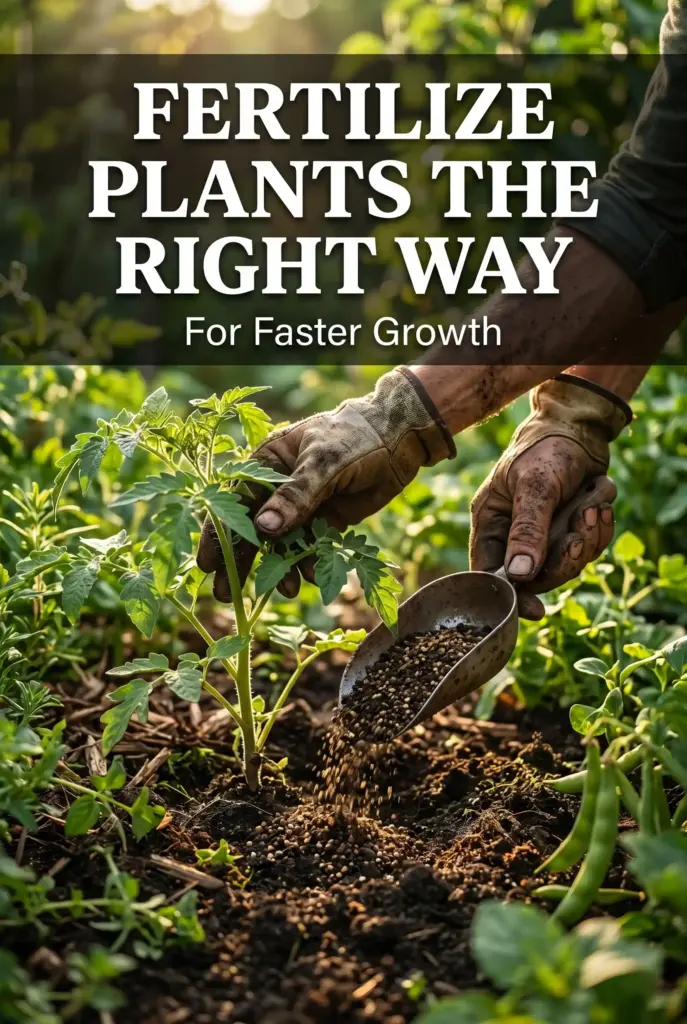
Every gardener wants plants that grow big, strong, and fast. While sunlight and water are essential, fertilizer is the extra boost that turns good growth into great growth. The challenge is knowing what to use, how much to apply, and when. Too little and your plants will struggle. Too much and you can burn them or harm the soil.
This guide covers everything you need to know about fertilizing plants for faster, healthier growth, whether you are working with vegetables, flowers, or houseplants.
Why Plants Need Fertilizer
Plants need three main nutrients to thrive, often called NPK:
- Nitrogen (N): Promotes leafy, green growth.
- Phosphorus (P): Supports strong roots and flower production.
- Potassium (K): Helps overall plant health and fruit development.
They also need trace minerals like magnesium, calcium, and iron. Soil often runs out of these nutrients over time, especially in containers or in vegetable beds. Fertilizer replaces what your plants take from the soil.
Organic vs. Synthetic Fertilizers
Both types work, but they behave differently.
- Organic fertilizers: Derived from natural sources like compost, manure, or bone meal. They release nutrients slowly and improve soil health.
- Synthetic fertilizers: Chemically manufactured with precise nutrient ratios. They work quickly but do not feed the soil long term.
Many gardeners use a mix of both. Organic for long term soil health, and synthetic for quick boosts when plants need fast growth.
Understand Fertilizer Labels
Every fertilizer shows three numbers on the package, such as 10-10-10. These numbers represent the percentage of nitrogen, phosphorus, and potassium.
- 10-10-10: Balanced fertilizer for general use.
- 5-10-10: Good for flowers and fruiting plants.
- 20-10-10: High nitrogen, great for leafy greens.
- 10-30-20: Higher phosphorus for blooming plants.
Match the numbers to what you are growing and what your plants need at each stage.
When to Fertilize
Timing matters as much as the type of fertilizer.
- Spring: Feed as plants wake up and start growing quickly.
- Summer: Feed regularly during the growing and fruiting season.
- Fall: Slow down feeding to let plants harden for winter.
- Winter: Most outdoor plants need little to no fertilizer.
For houseplants, feed every 4 to 6 weeks during spring and summer, and much less in fall and winter.
How Often to Fertilize
Follow the instructions on your fertilizer package, but a few general guidelines help:
- Slow release granular fertilizers last 2 to 3 months.
- Liquid fertilizers work faster and are usually applied every 1 to 2 weeks.
- Compost or manure can be added once or twice per season.
- Heavy feeders like tomatoes need more frequent feeding than low feeders like herbs.
Always apply fertilizer to moist soil to protect roots from burning.
Best Fertilizers for Faster Growth
Some fertilizers and amendments are especially known for boosting plant growth:
- Fish emulsion: Quick nitrogen boost and trace minerals.
- Seaweed extract: Rich in micronutrients and plant hormones that speed growth.
- Compost tea: Gentle and effective for all plants.
- Worm castings: A mild but powerful organic fertilizer.
- Bone meal: Good phosphorus source for strong roots and flowers.
Combining these naturally feeds both the plants and the soil.
Common Fertilizing Mistakes
- Using too much fertilizer, which burns roots and yellows leaves.
- Applying fertilizer to dry soil, which damages roots.
- Feeding plants in winter when they are resting.
- Using the wrong NPK ratio for what you are growing.
- Ignoring soil quality and trying to fix everything with fertilizer.
Remember that healthy soil is the foundation. Fertilizer is a boost, not a substitute for good soil.
Fertilizing Vegetable Gardens
Vegetables grow quickly and use up soil nutrients fast. Mix compost into the bed before planting, then side dress plants with additional fertilizer every 3 to 4 weeks. Tomatoes, peppers, and squash are heavy feeders and benefit from regular feeding throughout the season.
Fertilizing Flowers
Flowering plants need more phosphorus to produce blooms. Use a balanced fertilizer at planting, then switch to a bloom booster formula when flowers start forming. Deadhead spent blooms to keep the plant producing new ones.
Fertilizing Houseplants
Houseplants grow slower than outdoor plants, so they need less fertilizer. Use a diluted liquid fertilizer every 4 to 6 weeks in spring and summer. Reduce or stop feeding in fall and winter when growth slows down.
Signs Your Plants Need Fertilizer
Plants often show clear signs when they need food:
- Slow or stunted growth.
- Yellow or pale leaves.
- Weak stems and small flowers.
- Lack of fruit or small crops.
- Poor color and low energy.
If your plants look tired, a gentle feeding can often turn things around quickly.
Final Thoughts
Fertilizing is one of the most powerful tools a gardener has to speed up plant growth. The key is balance. Feed your plants the right nutrients at the right time, and they will reward you with lush leaves, bright flowers, and abundant harvests.
Pay attention to your soil, watch your plants closely, and use fertilizer as part of a complete care routine. Your garden will grow faster, stronger, and healthier than ever before.