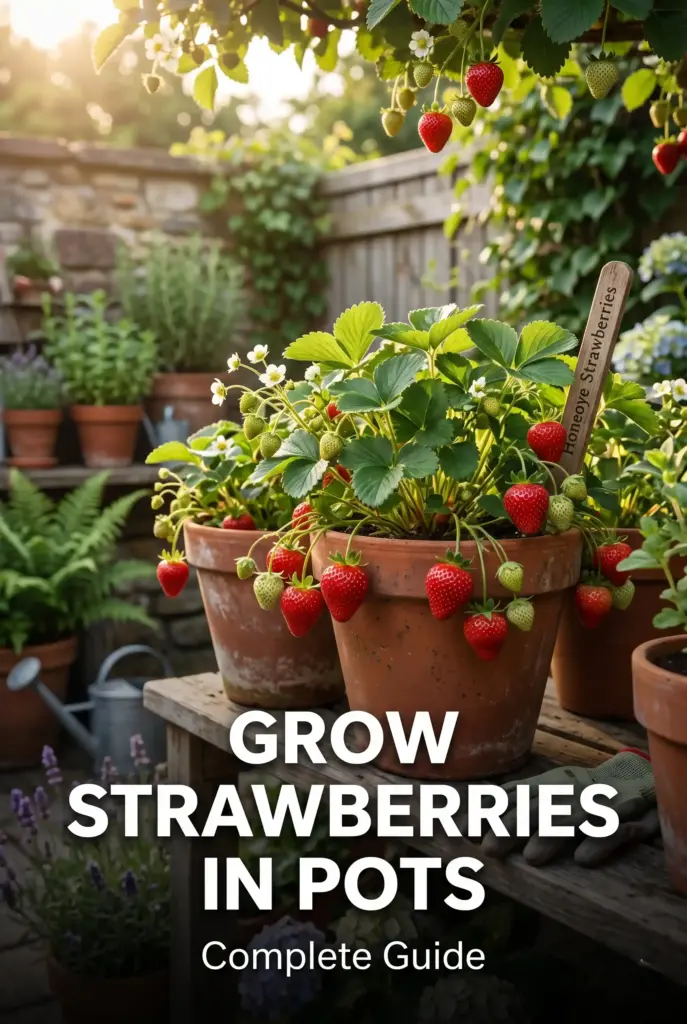
Strawberries are one of the most fun and rewarding fruits you can grow in pots. They thrive in containers, look beautiful on patios, and produce baskets of sweet, juicy berries from spring through summer. Even if you have only a balcony or sunny windowsill, you can grow strawberries successfully with the right setup. Container growing also keeps the berries cleaner, reduces pests, and makes care simple for any beginner.
Here is your complete guide to strawberry planting in pots, with everything you need to know for a sweet, productive harvest.
Why Grow Strawberries in Pots
Pot grown strawberries have many advantages over traditional ground beds:
- They fit in small spaces like balconies and patios.
- Pots warm up faster in spring for an earlier harvest.
- You can move pots to follow the sun.
- Pests and slugs are much easier to manage.
- They look beautiful as decorative plants too.
Strawberries are naturally compact, making them perfect for container gardening.
Choose the Right Variety
Some strawberry types are better suited to pots than others:
- Day neutral: Produces fruit all season long. Ideal for steady harvests.
- Everbearing: Gives 2 to 3 harvests through the year.
- June bearing: Produces one big crop in early summer.
- Alpine strawberries: Tiny and full of intense flavor, perfect for small pots.
For container growing, day neutral varieties like Albion or Seascape are popular because they keep producing throughout the season.
Pick the Right Container
Strawberries have shallow roots, but they still need space to spread out:
- Use a pot at least 8 to 10 inches deep.
- Choose containers wider than they are tall for more plants.
- Hanging baskets, strawberry towers, and window boxes all work well.
- Ensure good drainage holes.
Fabric grow bags are great for breathability, while terracotta pots add a beautiful classic look.
Use Quality Soil
Strawberries grow best in rich, well-drained soil with plenty of organic matter.
- Use a quality potting mix as the base.
- Mix in 30 percent compost for nutrients.
- Add a slow release fertilizer at planting.
- Aim for a pH between 5.5 and 6.5.
Avoid plain garden soil, which compacts in containers and slows root growth.
Where to Place Your Pots
Strawberries love sunshine. Place containers in a spot with at least 6 to 8 hours of direct sunlight per day. A sunny patio, balcony, or south facing window is ideal. In hot weather, light afternoon shade prevents the soil from drying out too quickly.
How to Plant Strawberries in Pots
Planting is easy and quick. Here is the right way to do it:
- Fill the pot with soil mix, leaving an inch from the top.
- Dig a small hole and place the plant so the crown is at soil level.
- Spread roots out gently in the hole.
- Cover with soil and press lightly.
- Water deeply after planting.
Burying the crown causes rot, while planting too high dries out the roots.
Spacing Container Strawberries
Strawberries need a little space to spread, even in pots:
- Plant 8 to 10 inches apart in wide containers.
- In hanging baskets, 2 to 3 plants are usually enough.
- Strawberry towers can hold many plants in vertical pockets.
- Avoid overcrowding, which leads to small fruit.
Watering Container Strawberries
Strawberries love consistent moisture but hate soggy roots. Container plants dry faster than ground plants, so check the soil daily.
- Water when the top inch feels dry.
- Aim for steady moisture rather than heavy soakings.
- Water at the base, not on the leaves.
- Mulch the surface with straw or pine needles.
In hot weather, you may need to water once or even twice a day.
Feeding Your Strawberry Plants
Strawberries are moderate feeders. Use a balanced fertilizer in early spring as new growth begins. Switch to a phosphorus rich blend when flowers appear to encourage bigger berries. Avoid heavy nitrogen, which leads to lots of leaves but small fruit. Compost tea or fish emulsion are great natural options.
Pinching First Flowers
It feels strange, but pinching off the first flowers on new strawberry plants leads to better long term yields. This redirects energy into root and leaf growth instead of fruiting too early. After this first pinch, allow the next round of flowers to grow and produce normally.
Protecting from Birds and Pests
Birds love strawberries. Cover your pots with bird netting once berries begin to ripen. Keep an eye out for slugs, snails, and aphids. Healthy soil, regular checks, and natural sprays usually keep them under control.
Pruning and Runners
Strawberry plants produce runners, which are long stems that root and produce new plants. Too many runners weaken the main plant. Pinch off most runners during the first year so the plant focuses on root development. Allow a few to root in their own pots if you want to expand your patch.
Common Problems and Solutions
- Yellow leaves: Often nutrient deficiency or too much water.
- Small berries: Caused by under feeding or too much heat.
- Few flowers: Usually from too much shade or excess nitrogen.
- Slugs: Use copper tape around the rim of pots.
Refreshing Your Plants
Strawberry plants produce best for 2 to 3 years, then yields drop. Replace older plants every few years with new ones or rooted runners to keep your container patch productive.
Harvesting Strawberries
Pick strawberries when they are fully red, fragrant, and slightly soft to the touch. Harvest every 1 to 3 days during peak season. Use scissors or pinch the stem gently to avoid damaging the plant. Eat them fresh, freeze them, or turn them into jam for a sweet, lasting taste of summer.
Final Thoughts
Strawberry planting in pots is one of the most rewarding and beginner friendly garden projects you can try. With the right container, soil, sun, water, and care, your strawberries will reward you with armloads of sweet, juicy berries. Container growing is also a beautiful way to add charm to small spaces.
Start your strawberry pot today, follow these tips, and enjoy fresh, homegrown berries straight from your patio or balcony.