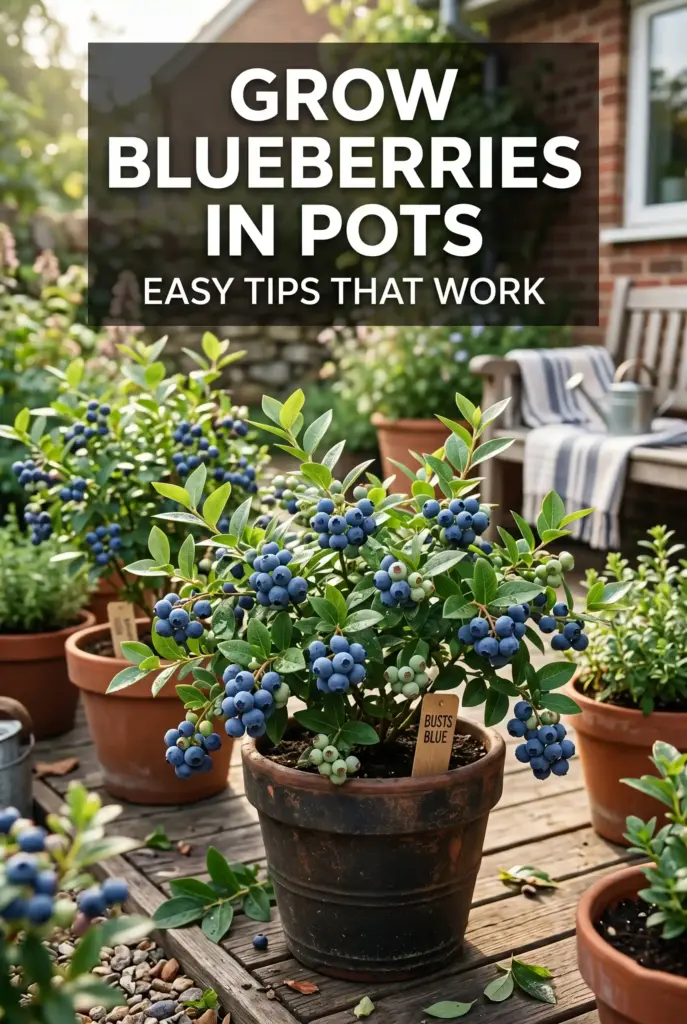
Growing blueberries in pots is one of the easiest ways to enjoy fresh, sweet berries at home, even if you do not have a backyard. Container blueberries thrive on patios, balconies, decks, and small garden spaces. Best of all, they let you control the soil perfectly, which is essential for blueberries since they need very specific growing conditions. With the right pot, soil, and care, a single plant can produce pounds of juicy berries each year.
Here are the easiest tips for growing healthy, productive blueberry plants in pots.
Why Grow Blueberries in Pots
Container blueberries have several big advantages over planting in the ground:
- You can control the soil pH precisely.
- They fit in small spaces like balconies and patios.
- Pots warm up early in spring for an earlier harvest.
- Fewer weeds and ground pests to deal with.
- You can move the pots if the weather changes.
If your soil is heavy clay or alkaline, container growing is the smartest choice.
Choose the Right Variety
Some blueberry varieties grow much better in pots than others. Look for compact or dwarf types:
- Top Hat: Small dwarf bush perfect for containers.
- Sunshine Blue: Compact and self pollinating.
- Pink Lemonade: Pink berries with a unique sweet flavor.
- Bushel and Berry Peach Sorbet: A colorful and fruitful container variety.
Plant at least two different varieties for cross pollination, which leads to bigger and more abundant berries. Self pollinating types still produce more fruit when grown alongside another variety.
Pick the Right Pot
Blueberries need plenty of root space to thrive. A large pot is essential.
- Choose a container at least 16 to 24 inches wide and deep.
- Use pots with several drainage holes.
- Fabric grow bags work well for breathability.
- Plastic or ceramic pots help retain moisture.
Avoid small pots that quickly dry out and limit root growth.
Use the Right Soil
This is the most important step. Blueberries need acidic soil with a pH between 4.5 and 5.5. Regular potting soil is too alkaline. Make a special blend by mixing:
- Half quality potting mix.
- Half peat moss or coconut coir.
- A handful of pine bark for extra acidity.
- A small amount of compost for nutrients.
If you cannot make your own, look for a soil mix designed for azaleas, rhododendrons, or blueberries.
Where to Place Your Blueberry Pot
Blueberries love sun. Choose a location with at least 6 to 8 hours of direct sunlight per day. A sunny patio, balcony, or south facing area is perfect. In very hot climates, some afternoon shade prevents the soil from drying out too quickly.
Planting Your Blueberry Bush
Plant your blueberry bush in early spring or fall. Follow these simple steps:
- Fill the pot two thirds full with your acidic soil mix.
- Place the bush so the top of the root ball sits an inch below the rim.
- Backfill with soil and gently firm around the roots.
- Water deeply until water runs from the drainage holes.
Add a layer of pine bark or pine needles on top to keep the pH steady and lock in moisture.
Watering Container Blueberries
Container blueberries dry out faster than plants in the ground. Check the soil daily, especially in summer. Aim to keep the soil consistently moist but not soggy. Water deeply rather than just lightly wetting the surface.
- Use rainwater when possible, since tap water is often alkaline.
- Avoid letting the pot sit in standing water.
- Mulch the surface with pine needles or pine bark.
- During heat waves, you may need to water twice a day.
Feeding Your Blueberry Plant
Use a fertilizer made for acid loving plants like blueberries, azaleas, or rhododendrons. Apply in early spring as new growth begins, and again 6 weeks later. Avoid generic fertilizers, which can raise the pH and hurt the plant. Container plants need slightly more frequent feeding than ground planted ones.
Pruning Your Container Blueberry
Pruning keeps your bush healthy and productive. In late winter while the plant is dormant:
- Remove dead, broken, or weak branches.
- Cut out the oldest canes to encourage new growth.
- Thin the bush to improve air flow.
- Keep the strongest, youngest stems.
Light pruning each year is much better than skipping it for several years.
Protecting from Birds
Birds adore blueberries. Cover your plants with bird netting once berries start to ripen. You can also drape lightweight mesh over the pot to keep birds away. Make sure the netting is secure so birds do not get trapped.
Common Problems and Solutions
- Yellow leaves: Usually means the soil is too alkaline.
- Slow growth: Often caused by under watering or lack of nutrients.
- Tiny berries: Could be from missing pollination or stress.
- Wilting: Check soil moisture or root binding.
Repotting Every Few Years
Every 2 to 3 years, move your blueberry to a slightly larger pot or refresh the soil. This gives the roots more space and replaces nutrients that have been used up. Spring is the best time to repot.
When to Harvest
Blueberries are ready to harvest when they are completely blue with a soft, dusty coating. Ripe berries fall off the bush with a gentle touch. Pick every 2 to 3 days during peak season for the best flavor.
Final Thoughts
Growing blueberry plants in pots is one of the most rewarding projects for any home gardener. With acidic soil, plenty of sun, steady watering, and a little pruning, your bushes will reward you with bowls of sweet, juicy berries each summer. Container growing also makes blueberries accessible to anyone, even those with the smallest spaces.
Set up your first pot this season, follow these tips, and enjoy the joy of homegrown blueberries straight from your own balcony or patio.