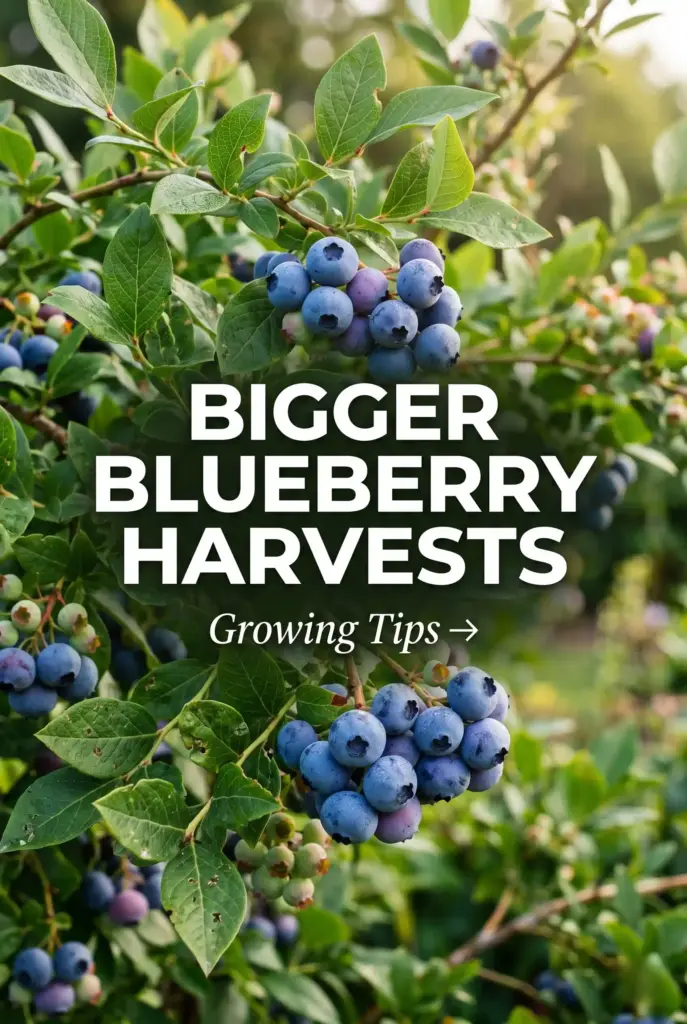
Few fruits taste better than blueberries picked fresh from your own garden. Sweet, tangy, and packed with antioxidants, blueberries are a favorite among home gardeners. The good news is that with the right care, even a beginner can grow big, productive bushes that yield pounds of berries each season.
This guide shares the best blueberry growing tips to help you get bigger, better harvests year after year.
Choose the Right Variety
Not every blueberry grows well in every region. There are three main types, each suited to different climates:
- Highbush: The most common type, best for cool and moderate climates.
- Lowbush: Hardy wild type that thrives in cold northern regions.
- Rabbiteye: Heat tolerant and perfect for southern regions.
For bigger harvests, plant at least two different varieties that flower at the same time. Cross pollination produces larger berries and heavier yields.
Pick a Sunny Spot
Blueberries need full sun to produce their best fruit. Choose a spot with at least 6 to 8 hours of direct sunlight per day. Less sun means fewer berries and smaller harvests. Shaded plants also attract more disease.
Get the Soil Right
Blueberries are picky about soil. They need acidic, well-drained soil with a pH between 4.5 and 5.5. If your soil is too alkaline, your plants will struggle no matter how much you water or feed them.
- Test your soil before planting to check the pH.
- Mix in peat moss, pine bark, or composted leaves to lower pH.
- Avoid planting where lawn fertilizers or lime have been used.
- For heavy clay or alkaline soil, grow blueberries in raised beds or containers.
Good soil is the single biggest factor in a productive blueberry patch.
Planting Blueberries
Plant blueberries in early spring or fall when the weather is cool. Space bushes 4 to 6 feet apart in rows about 8 feet apart. Dig a hole twice as wide as the root ball and plant at the same depth the bush was in its pot. Water deeply after planting and add a thick layer of mulch.
Mulch Is Your Secret Weapon
Blueberries have shallow roots, so they benefit greatly from mulch. A 3 to 4 inch layer of pine bark, pine needles, or wood chips helps:
- Hold moisture in the soil.
- Keep roots cool in summer and insulated in winter.
- Prevent weeds from competing with the roots.
- Slowly lower soil pH as it breaks down.
Refresh the mulch every spring for steady benefits.
Water Consistently
Blueberries need about 1 to 2 inches of water per week, especially during flowering and fruit development. Inconsistent watering leads to small, tough berries. Use a drip system or soaker hose to deliver water slowly and evenly. Avoid overhead watering, which wets the leaves and invites disease.
Feed the Right Way
Blueberries are light feeders and sensitive to the wrong fertilizer. Use an acidic fertilizer formulated for blueberries, azaleas, or rhododendrons.
- Feed in early spring when leaves emerge.
- Feed again 6 weeks later during fruit development.
- Avoid high nitrogen lawn fertilizers, which damage roots.
- Do not fertilize in fall, which encourages weak growth before winter.
Less is more with blueberry feeding. Light, regular doses beat heavy occasional feedings.
Prune for Bigger Berries
Pruning is one of the best ways to increase your harvest. Young bushes need little pruning, but once plants are 3 years old, pruning becomes important.
- Remove dead or damaged wood each winter.
- Cut out the oldest, thickest canes to encourage new growth.
- Thin crowded branches for better air flow.
- Leave the strongest, youngest canes for the next season.
Properly pruned bushes produce bigger, sweeter berries than overgrown ones.
Protect Your Harvest from Birds
Birds love blueberries as much as you do. Cover your bushes with bird netting once the fruit starts to ripen. Secure the netting so birds cannot get trapped inside. You can also use reflective tape or scare devices, but netting is the most reliable option.
Know When to Harvest
Blueberries are ready when they are fully blue all the way around, with a soft, dusty coating. A ripe berry will fall into your hand with a gentle touch. Unripe ones still have red or pink, and over ripe ones feel mushy.
Pick every 3 to 5 days during peak season. Fresh blueberries keep for about a week in the fridge or can be frozen for up to a year.
Common Problems and Solutions
- Yellow leaves: Usually a sign of soil that is too alkaline.
- Small berries: Caused by lack of water or missing pollination partner.
- Wilted plants: Often from root stress due to poor drainage.
- Few flowers: Too much shade or over fertilization.
Final Thoughts
Growing blueberries takes a little extra attention, but the reward is absolutely worth it. With acidic soil, steady water, smart pruning, and proper feeding, your bushes will reward you with bigger harvests season after season.
Plant a few bushes this year, follow these tips, and enjoy buckets of fresh, sweet blueberries straight from your own backyard.