If you have been dreaming of pulling up your own deep red, sweet-tasting beets, raised beds are one of the easiest places to start. They give you full control over the soil, drainage, and spacing, which is exactly what beets love. Even better, they are beginner friendly and do not need a huge amount of space to produce a great harvest.
In this guide, you will learn everything you need to plant beets in raised beds, from choosing the right variety to harvesting them at the perfect size.
Why Raised Beds Are Perfect for Beets
Beets are root vegetables, which means they need loose, well-drained soil to form smooth, round roots. In regular garden soil, rocks, clay, and compacted patches can cause misshapen or stunted beets. Raised beds solve this problem instantly.
Here is why raised beds work so well:
- The soil stays loose and fluffy, so roots can grow straight down.
- Drainage is excellent, which prevents rot and fungal issues.
- The soil warms up faster in spring, letting you plant earlier.
- You can control exactly what goes into the bed, from compost to mulch.
For beginners, this means fewer mistakes and a higher chance of success in the first season.
Choosing the Right Beet Variety
Not all beets are the same. Some are small and sweet, while others are big and earthy. For beginners in raised beds, try one of these reliable varieties:
- Detroit Dark Red: A classic, sweet, round beet that is easy to grow.
- Chioggia: Italian heirloom with beautiful pink and white rings inside.
- Golden Beet: Mild, sweet, and does not stain your cutting board.
- Bull’s Blood: Grown for both tasty roots and deep red leaves.
If you are unsure where to start, Detroit Dark Red is forgiving and produces a reliable crop in most climates.
Preparing the Raised Bed Soil
Beets thrive in loose, fertile soil with a pH between 6.0 and 7.0. Before planting, mix your raised bed soil with a generous amount of compost. A good blend is about 60 percent topsoil, 30 percent compost, and 10 percent coarse sand or perlite for drainage.
Avoid adding fresh manure, as it contains too much nitrogen and will cause lots of leafy growth but small roots. Rake the surface smooth and remove any stones or root pieces from previous crops.
When to Plant Beets
Beets are cool season crops. They grow best when temperatures are between 50 and 70 degrees Fahrenheit. Plant them in early spring, about two to four weeks before your last frost date. You can also do a second planting in late summer for a fall harvest.
Seeds germinate best in soil that is at least 50 degrees. If you are planting in cooler weather, cover the bed with a row cover to warm the soil.
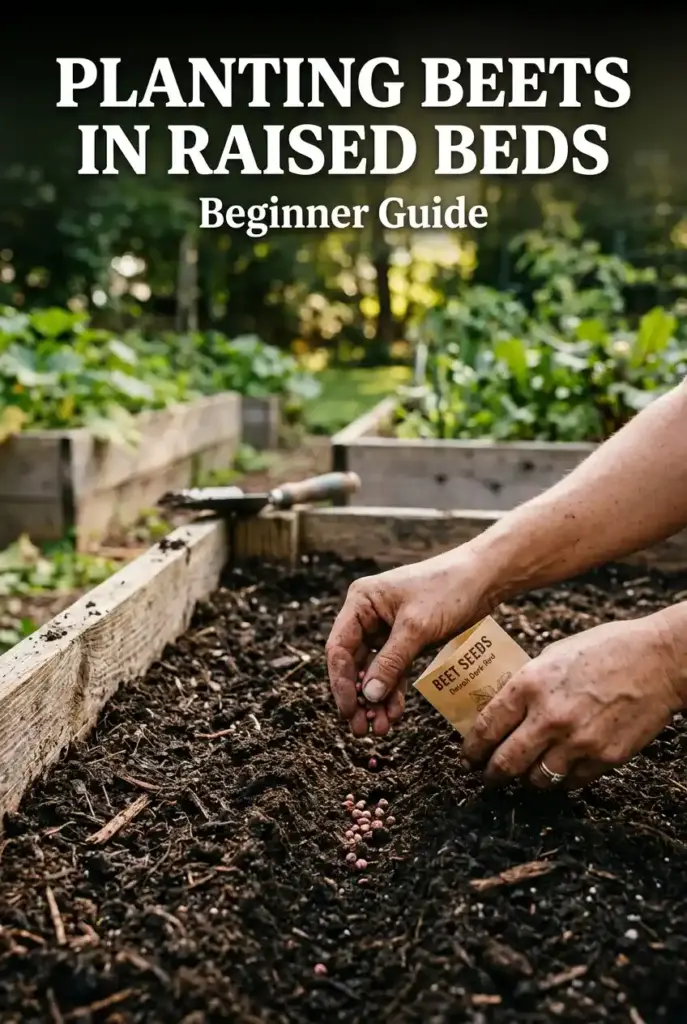
How to Plant Beet Seeds
Planting beets is simple, but a few small details make a big difference.
- Sow seeds about half an inch deep directly in the raised bed.
- Space seeds two inches apart, in rows six inches apart.
- Water gently right after planting to settle the soil.
- Keep the soil consistently moist until seedlings appear in 7 to 14 days.
Each beet seed is actually a cluster that can produce two or three seedlings. This means you will need to thin them later so the roots have space to grow.
Thinning Your Beets
Thinning feels harsh, but it is essential. When seedlings are about two to three inches tall, snip the weaker ones at the soil line, leaving one strong plant every three to four inches. Do not pull them, as this disturbs the roots of the plants you want to keep. The baby greens you remove are delicious in salads.
Watering and Feeding
Beets need about one inch of water per week. Consistent moisture keeps the roots tender and sweet. If watering is uneven, you may end up with cracked or woody beets. Mulch the bed with straw or shredded leaves to lock in moisture and keep weeds down.
Feed your beets with a balanced organic fertilizer about three weeks after planting. Avoid high nitrogen feeds, which push leafy growth at the expense of the roots.
Harvesting Beets
Most beets are ready to harvest in 50 to 70 days. You can pull them when they are the size of a golf ball for tender baby beets, or let them grow to the size of a tennis ball for a fuller harvest. Anything larger can become tough and woody.
Gently loosen the soil around the root and pull straight up. Twist off the greens, leaving about an inch of stem to prevent bleeding, and store the roots in the fridge. Do not throw away the greens. They are packed with nutrients and taste similar to Swiss chard.
Final Thoughts
Growing beets in raised beds is one of the most satisfying ways to start your vegetable garden. With loose soil, steady watering, and a bit of patience, you will be rewarded with sweet, earthy roots and tender greens all season long. Whether you roast them, pickle them, or toss them into salads, homegrown beets always taste better than store bought.
Start small, keep it simple, and enjoy the process. Your first beet harvest is closer than you think.