Carrots are one of the most rewarding vegetables you can grow, but they can also be one of the trickiest if you do not know their little secrets. Forked roots, bitter flavor, or no germination at all are common problems for beginners. The good news is that most carrot issues come down to a few key details that are easy to fix.
In this guide, you will find the most practical carrot growing tips to help you harvest long, sweet, crunchy roots that beat anything you can buy at the store.
Choose the Right Variety for Your Soil
Not every carrot fits every garden. If your soil is rocky or heavy, long varieties like Imperator will fork and twist. Short varieties are much more forgiving.
- Nantes: Sweet, crisp, and great for most home gardens.
- Danvers: Strong growers that handle heavier soil well.
- Paris Market: Small and round, ideal for containers or shallow beds.
- Rainbow Mix: A fun option with purple, yellow, and white carrots.
If this is your first season, start with Nantes. They germinate well and taste excellent.
Prepare Deep, Loose Soil
Carrots need loose, stone-free soil at least 12 inches deep. Anything that blocks the root, like a rock or a clump of clay, will cause it to split or twist. Before planting, loosen the soil with a digging fork and mix in sifted compost.
Avoid adding fresh manure or heavy fertilizer. High nitrogen causes hairy, forked carrots with lots of leaves but poor roots. A light compost mix is all they need.
Sow Seeds Correctly
Carrot seeds are tiny and easy to overplant. Here is how to sow them properly:
- Plant seeds a quarter inch deep directly in the garden.
- Space them about one inch apart in rows six inches apart.
- Cover lightly with sifted soil or fine compost.
- Gently water with a fine mist to avoid washing them away.
Never transplant carrots. They do not like their roots disturbed and will often fork if you try.
Keep the Soil Moist During Germination
This is the step most beginners miss. Carrot seeds take 14 to 21 days to germinate, and if the soil dries out even once, the seeds will die. Keep the surface consistently damp for the entire germination period. A light board or damp burlap sack laid over the seeds helps hold moisture until you see sprouts, then remove it right away.
Thin Seedlings Without Mercy
When seedlings are two inches tall, thin them to three inches apart. This feels wasteful, but overcrowded carrots cannot grow properly. Use scissors to snip the tops instead of pulling, since pulling disturbs the roots of the plants you want to keep.
Water Deeply and Evenly
Carrots need about one inch of water per week. Inconsistent watering leads to cracked or bitter carrots. Water deeply so moisture reaches the bottom of the root zone, then let the top inch dry slightly before watering again. Mulch with straw to keep moisture steady and prevent weeds.
Watch for Pests
The most common carrot pest is the carrot fly, which lays eggs near the plants. Its larvae tunnel into the roots and ruin them. Protect your crop with a fine mesh row cover from planting to harvest. Companion planting with onions or chives can also help confuse the pests with their strong scent.
Feed Lightly
Carrots do not need heavy feeding, but a light dose of balanced fertilizer four weeks after planting helps roots size up. Choose something low in nitrogen and higher in phosphorus and potassium, which support root development.
Know When to Harvest
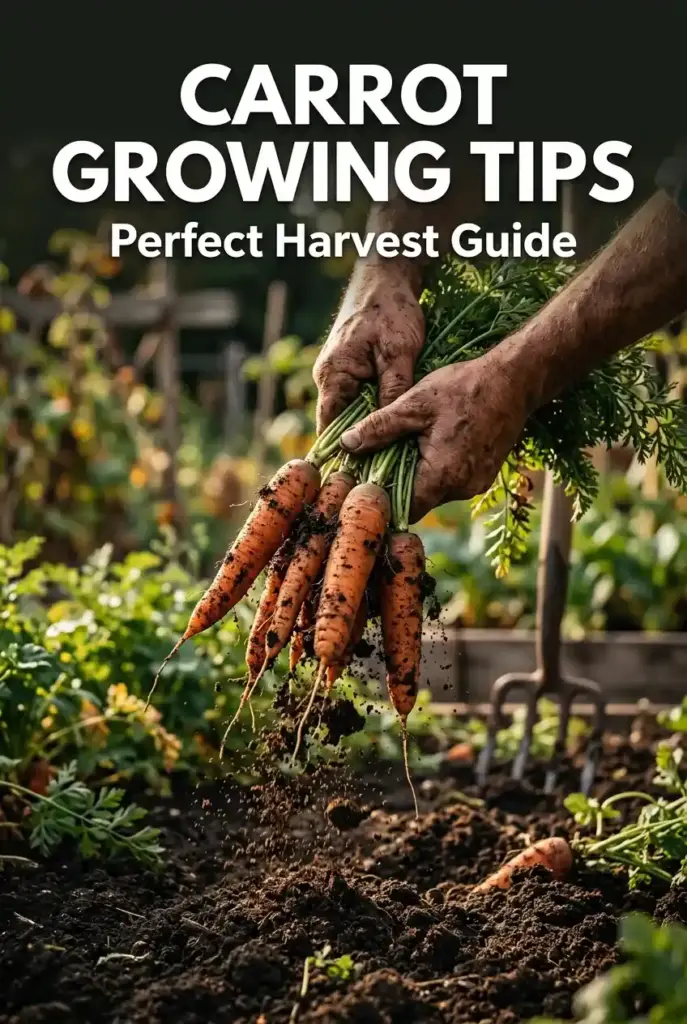
Most carrots are ready in 60 to 80 days, depending on the variety. The top of the root should be visible at the soil line and about three quarters of an inch thick. To check, gently brush away some soil and peek. If they look good, loosen the soil with a fork and pull gently at the base of the greens.
For the sweetest flavor, harvest carrots after a light frost. Cold temperatures convert starches into sugars, giving you the crunchiest, sweetest carrots of the season.
Common Mistakes to Avoid
- Planting in rocky or heavy clay soil without loosening it first.
- Letting seeds dry out during germination.
- Adding too much nitrogen, which causes forked roots.
- Skipping thinning, which results in tiny crowded carrots.
- Harvesting too late, which makes them tough and woody.
Final Thoughts
Growing carrots is not hard once you understand what they need. Loose soil, steady water, and patience during germination are the three real secrets. Once you nail those, you will enjoy one of the freshest, crunchiest, sweetest vegetables you can pull from your own garden.
Start with a small patch, learn the rhythm, and before long you will be pulling up carrots in every color, shape, and size you can imagine.