Roses have been loved by gardeners for centuries, and with good reason. Their elegant blooms, beautiful fragrance, and incredible variety make them one of the most rewarding plants you can grow. Whether you dream of a cottage garden full of soft pinks, a formal landscape with bold reds, or an arch of climbing roses over your front gate, you can make it happen with the right planning. Even better, growing roses is much easier than most beginners think.
Here are the best rose planting ideas and tips to help you grow stunning roses at home.
Choose the Right Type of Rose
Before planting, get to know the main rose categories:
- Hybrid teas: Classic long stemmed roses, perfect for bouquets.
- Floribundas: Cluster blooms with strong repeat flowering.
- Shrub roses: Hardy, low maintenance, and beginner friendly.
- Climbing roses: Tall, beautiful, and great for arches and walls.
- Ground cover roses: Low spreading types perfect for borders.
Mixing several types creates layers of color, fragrance, and texture.
Plan Your Rose Garden Layout
Good planning makes your roses look stunning. Sketch your garden first and consider:
- Tall climbers along fences or arches.
- Shrub roses as the backbone of garden beds.
- Hybrid teas as colorful focal points.
- Ground covers along walkways and borders.
Group roses in threes or fives for a fuller, more natural look.
Pick the Right Spot
Roses thrive with plenty of sunshine and air flow:
- Choose a location with at least 6 hours of direct sun.
- Pick a spot with morning sun to dry leaves quickly.
- Avoid areas with heavy tree root competition.
- Allow space for healthy airflow between plants.
Sunlight is the secret to bigger blooms and healthier plants.
Prepare the Soil
Healthy soil is the foundation of beautiful roses:
- Loosen the soil to a depth of 12 to 18 inches.
- Mix in plenty of compost or aged manure.
- Aim for a pH between 6.0 and 6.8.
- Make sure drainage is excellent.
Good soil preparation pays off with stronger plants and many years of beautiful flowers.
How to Plant Roses
Whether you are planting bare root or potted roses, the process is similar:
- Dig a hole twice as wide and as deep as the root ball.
- Mix compost into the soil.
- Place the rose at the right depth, with the graft union just above ground in warm climates.
- Backfill with soil and gently firm.
- Water deeply right after planting.
Spacing depends on the variety. Shrubs need 2 to 3 feet apart, while climbers need 4 to 6 feet.
Mulching for Healthier Roses
A 2 to 3 inch layer of mulch around the base helps in many ways:
- Keeps soil moist and cool.
- Reduces weeds.
- Adds organic matter as it breaks down.
- Prevents soil splash that spreads disease.
Use shredded bark, compost, or pine needles for the best results.
Watering Your Roses
Roses need deep, steady watering rather than light sprinkles:
- Aim for 1 to 2 inches per week.
- Water at the base, not on the leaves.
- Morning watering is best to allow leaves to dry.
- Use a soaker hose or drip irrigation for steady moisture.
Consistent watering helps prevent stress and disease.
Feeding for Lots of Blooms
Roses are heavy feeders. Apply a balanced rose fertilizer every 4 to 6 weeks during the growing season. Stop feeding 6 weeks before the first frost so the plants can prepare for winter.
Pruning Roses
Pruning shapes your roses and encourages more flowers. Prune in late winter or early spring as buds begin to swell:
- Remove dead or damaged canes.
- Cut out crossing or crowded branches.
- Open the center for sunlight and air.
- Cut just above outward facing buds.
Annual pruning keeps roses healthy and full of blooms.
Deadheading for Repeat Blooms
Removing spent flowers, called deadheading, encourages your roses to bloom again. Snip just above the first set of 5 leaves below the faded flower. This sends a signal to the plant to grow new buds rather than set seed.
Common Rose Problems
- Black spot: Water at the base and remove infected leaves.
- Powdery mildew: Improve airflow and avoid wet leaves.
- Aphids: Spray with soapy water or attract ladybugs.
- Japanese beetles: Hand pick them in the morning.
Creative Rose Garden Ideas
Try one or more of these designs for your garden:
- Cottage garden: Mix roses with lavender and foxgloves.
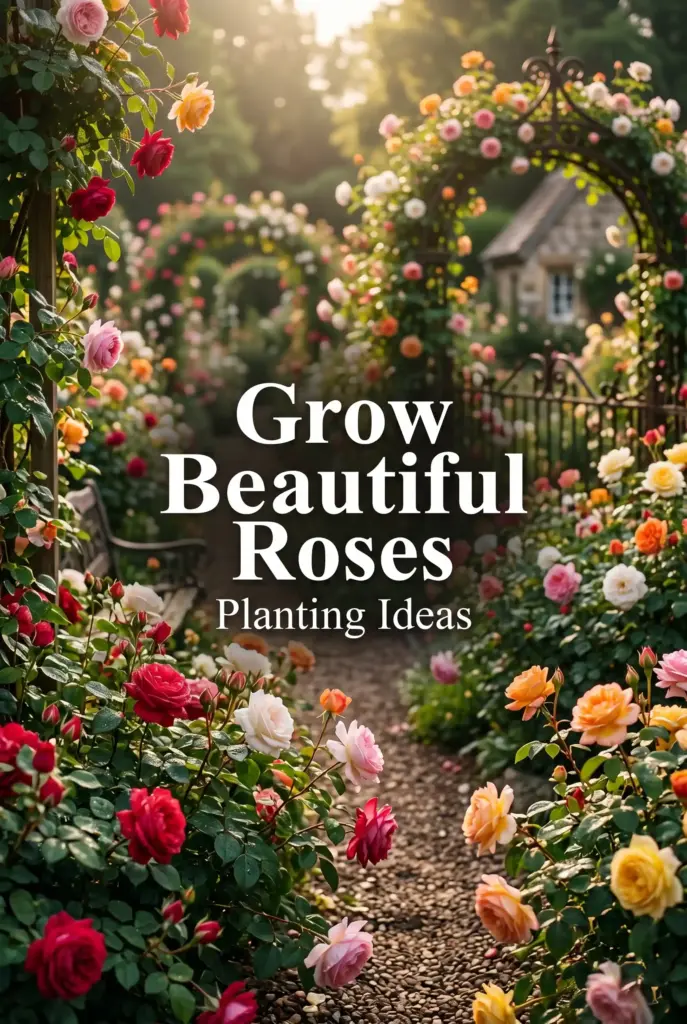
- Rose arch: Train climbers over an arbor for a stunning entrance.
- Container roses: Beautiful on patios and balconies.
- Scented garden: Group fragrant varieties near seating areas.
- Border edging: Use ground cover roses for soft, colorful edges.
Winter Care for Roses
In cold climates, mulch heavily around the base in late fall. Cover tender varieties with burlap or rose cones for protection. In mild areas, a simple layer of mulch is usually enough. Pruning is best done in late winter, not fall.
Final Thoughts
Growing roses at home is one of the most beautiful and satisfying gardening experiences you can have. With the right varieties, smart planning, and steady care, your garden can be filled with stunning, fragrant blooms for many years. Roses are a long term investment that reward you season after season.
Start with a few plants this year, follow these tips, and watch your garden bloom into a breathtaking display of color and beauty.