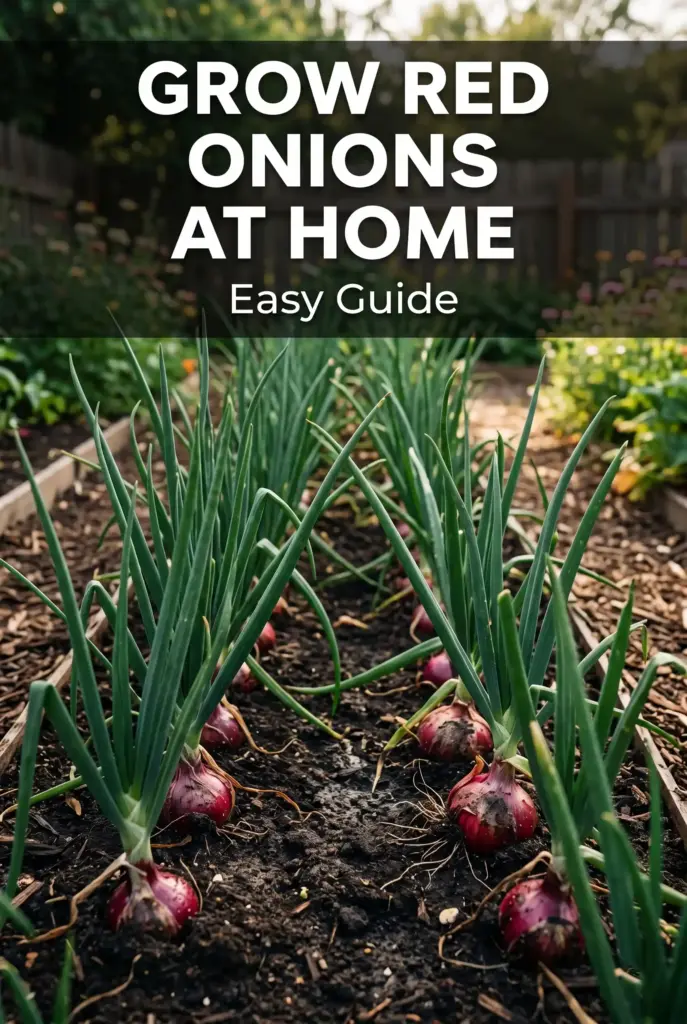
Red onions are one of the most beautiful and flavorful vegetables you can grow at home. Their deep purple color and sweet, mild flavor make them a favorite for salads, sandwiches, and grilling. Best of all, red onions are surprisingly easy to grow, even for beginners. With the right setup, you can enjoy a steady supply of fresh, homegrown red onions, whether you have a backyard garden, raised bed, or just a few large containers.
Here is your complete easy guide to growing red onion plants at home and getting a vibrant, generous harvest.
Why Grow Red Onions at Home
Homegrown red onions have many advantages over store bought:
- Stronger flavor and crisper texture.
- Cheaper than buying organic onions.
- Beautiful color in your garden.
- They store well for months after harvest.
- Easy to grow with minimal effort.
Even a few onion plants can keep your kitchen stocked for weeks.
Understand Onion Day Length
Onions are unique in that they need a certain amount of daylight to form bulbs:
- Long day onions: Need 14 to 16 hours of daylight. Best for northern regions.
- Short day onions: Need 10 to 12 hours of daylight. Best for southern regions.
- Day neutral onions: Grow well in most climates.
Choosing the wrong type for your region means small or no bulbs. Always check the variety before planting.
Best Red Onion Varieties
Some popular red onion varieties for home gardens include:
- Red Burgundy: Sweet, mild, and beginner friendly.
- Red Wing: Stores well and has bold flavor.
- Red Creole: Heat tolerant and great for warm climates.
- Red of Florence: Italian heirloom with elongated shape.
If you are unsure, Red Burgundy is a reliable choice for most gardens.
Choose Your Planting Method
There are three ways to plant red onions, each with its own benefits:
- Seeds: Cheapest option with the most variety, but slower.
- Sets: Small dry bulbs, planted in spring. Easy and beginner friendly.
- Transplants: Young plants that grow quickly and produce big bulbs.
For first time growers, sets or transplants give the easiest, fastest results.
When to Plant Red Onions
Onions are cool season crops:
- In cold climates, plant in early spring.
- In warm climates, plant in fall or early winter.
- Start seeds indoors 8 to 10 weeks before transplanting.
- Avoid planting during summer heat.
Onions need cool temperatures to grow strong leaves before forming bulbs.
Prepare the Soil
Red onions prefer loose, fertile, well-drained soil:
- Mix in compost for nutrients and structure.
- Aim for a pH between 6.0 and 7.0.
- Loosen the soil to remove clumps and rocks.
- Avoid spots where onions, garlic, or leeks grew last year.
Strong soil leads to plump, healthy bulbs.
How to Plant Red Onions
Planting onions is simple and quick:
- Plant sets and transplants 1 inch deep.
- Space plants 4 to 6 inches apart.
- Set rows 12 inches apart for easy access.
- Water gently to settle the soil.
If you want green onions, plant a few extras closer together and pull them young.
Sunlight and Placement
Red onions love sunshine. Plant them in a spot with at least 6 hours of direct sun per day. Less sun means smaller bulbs and slow growth.
Watering Red Onions
Onions have shallow roots, so they need consistent moisture:
- Aim for about 1 inch of water per week.
- Water at the base, not on the leaves.
- Mulch the bed to keep soil moist.
- Stop watering 2 weeks before harvest.
Steady watering produces sweet, juicy bulbs.
Feeding for Big Bulbs
Red onions are heavy feeders during early growth. Use a nitrogen rich fertilizer every 2 to 3 weeks until bulbs begin to form. Once the bulbs start swelling, stop feeding so the plants focus energy on the bulbs.
Weed Carefully
Onions hate competition. Pull weeds by hand to avoid disturbing the shallow roots. Mulching with straw or grass clippings is a great way to suppress weeds and keep the soil moist.
Common Problems and Solutions
- Yellow leaves: Often a sign of nutrient deficiency or over watering.
- Bolting: Caused by hot weather. Plant earlier next time.
- Small bulbs: Usually from wrong day length variety or weeds.
- Soft spots: Indicate disease. Remove affected bulbs immediately.
When to Harvest Red Onions
Red onions are usually ready 90 to 120 days after planting:
- The tops yellow and fall over naturally.
- The bulbs push up from the soil.
- The outer skin turns papery and dry.
Once half the tops have fallen, stop watering and let the bulbs cure in place for a week.
Curing for Long Storage
On a dry day, gently lift the bulbs with a fork. Brush off the soil but do not wash them. Lay them in a single layer in a dry, shady, well-ventilated area for 2 to 3 weeks. Once cured, trim the tops and store them in mesh bags or crates in a cool, dry place. Properly cured red onions can last 3 to 6 months.
Final Thoughts
Growing red onions at home is one of the most rewarding gardening projects. They are easy, productive, and store beautifully for months. With the right variety, loose soil, full sun, and steady watering, you can enjoy a beautiful red onion harvest from a small backyard or container patch.
Plant a few sets or transplants this season, follow these tips, and discover how easy and rewarding homegrown red onions can be.