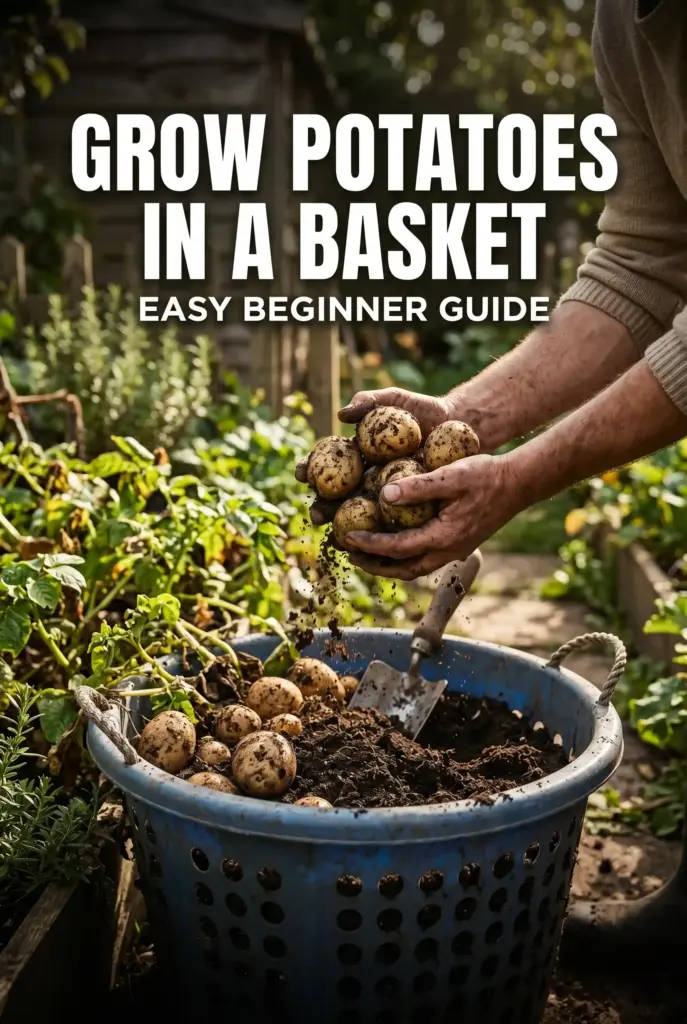
Growing potatoes in a laundry basket is one of the cleverest and most fun gardening tricks you can try. It costs almost nothing, uses something most people already have at home, and gives you a surprisingly big harvest. Laundry baskets are perfect for potatoes because they have built in drainage, plenty of room for roots, and they are easy to lift for harvesting. If you have a small space or have never grown potatoes before, this method is one of the easiest ways to start.
Here is your complete beginner guide to planting potatoes in a laundry basket and enjoying a generous, homegrown harvest.
Why Use a Laundry Basket
Laundry baskets work surprisingly well for potatoes, and they offer many practical advantages:
- They have plenty of drainage holes built in.
- They are lightweight and easy to move around.
- They give roots room to spread out.
- They make harvesting incredibly easy. Just tip the basket over.
- They are a great way to recycle old plastic baskets.
This method is perfect for balconies, patios, small backyards, and anywhere with limited space.
Choose the Right Laundry Basket
Almost any plastic laundry basket works, but a few features make a big difference:
- Choose a basket at least 16 inches deep.
- Use sturdy plastic that can hold soil weight.
- Avoid baskets with very large open holes that let soil fall out.
- If holes are too big, line the inside with burlap or mesh.
Older baskets, free finds, or budget store ones all work well, since they only need to last a season.
Pick the Right Potato Variety
Some potatoes are better suited for container growing than others. Look for early or mid season varieties that mature in 70 to 90 days:
- Yukon Gold: Reliable and full of flavor.
- Red Norland: Quick growing and disease resistant.
- Fingerlings: Compact, flavorful, and fun to grow.
- Charlotte: A favorite salad potato with smooth skin.
Always buy certified seed potatoes from a nursery. Store bought ones may be treated to prevent sprouting.
Prepare Your Seed Potatoes
About 2 weeks before planting, set your seed potatoes in a bright, cool spot. Small green sprouts called chits will appear from the eyes. This step gives your potatoes a faster, stronger start. Cut large seed potatoes into chunks with at least 2 eyes each, and let the cuts dry for a day before planting.
Get the Right Soil Mix
Potatoes love loose, rich, well-drained soil. A simple mix works great in a laundry basket:
- Half quality potting mix.
- Half compost or aged manure.
- A handful of slow release organic fertilizer.
- Make sure the mix is light and fluffy.
Avoid heavy garden soil, which compacts in the basket and slows growth.
Step by Step Planting Process
Planting potatoes in a laundry basket is easy, even for first time gardeners:
- Add 4 to 6 inches of soil mix to the bottom of the basket.
- Place 3 to 4 seed potatoes on top with sprouts facing up.
- Cover them with another 4 inches of soil.
- Water gently until the soil is evenly moist.
Do not fill the basket all the way at first. You will add more soil as the plants grow.
Hilling Your Potatoes
As your plants grow, you need to hill them, which means covering the lower stems with more soil. Each time the plants reach 6 inches tall, add enough soil to bury the bottom half of the stems.
- Hilling encourages tubers to form along the buried stems.
- It increases your overall harvest dramatically.
- Continue until the basket is nearly full.
By the end, your basket will be full of soil and packed with growing potatoes.
Watering and Sunlight
Potatoes need consistent watering and full sun to thrive:
- Place the basket in a spot with at least 6 hours of direct sun.
- Water when the top inch of soil feels dry.
- Containers dry faster, so check daily in hot weather.
- Avoid letting the basket sit in standing water.
Steady moisture leads to plump, well shaped tubers.
Feeding Your Plants
Potatoes are moderate feeders, but a little extra nutrition helps them produce more tubers.
- Feed every 3 weeks with a balanced fertilizer.
- Switch to a potassium rich blend once flowering begins.
- Compost tea is a great natural option.
- Avoid heavy nitrogen, which produces leaves but few potatoes.
Common Problems and Solutions
- Yellow leaves: Normal at the end of the season. Check earlier signs for pests.
- No tubers forming: Often from poor hilling or compacted soil.
- Wilting: Usually caused by uneven watering.
- Aphids and beetles: Use neem oil or remove by hand.
When to Harvest
You have two harvest options:
- New potatoes: Harvest small ones around 60 to 70 days after planting.
- Mature potatoes: Wait until the plants yellow and die back, usually 80 to 100 days.
To harvest, simply tip the basket onto a tarp and sift through the soil. It feels like a treasure hunt, with potatoes hidden throughout the basket.
Storing Your Potatoes
Let freshly harvested potatoes dry in a shady spot for a few hours before storing. Keep them in a cool, dark, well ventilated area. Properly stored, they can last 2 to 3 months. Do not wash them until ready to cook, as moisture causes spoilage.
Final Thoughts
Potato planting in a laundry basket is one of the most fun and beginner friendly gardening tricks out there. It costs little, uses materials most people already own, and rewards you with a fresh, satisfying harvest. The combination of good drainage, easy hilling, and simple harvest makes it ideal for small spaces or first time gardeners.
Try it this season, follow these steps, and enjoy the joy of pulling fresh potatoes out of a basket you set up in just a few minutes.