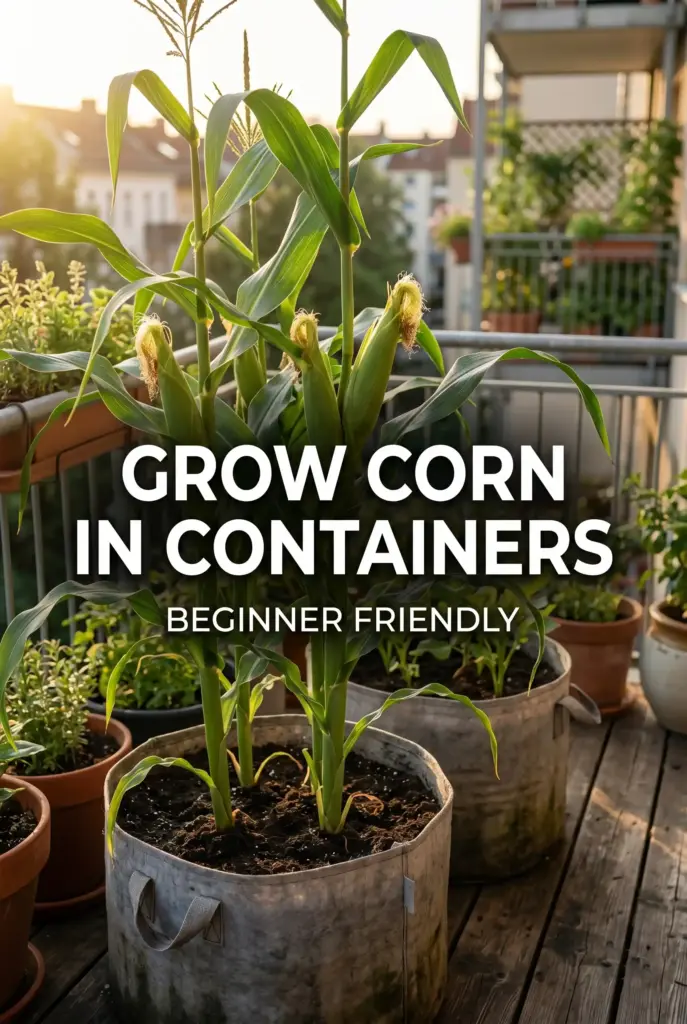
Growing corn in containers might sound surprising, but it is absolutely possible with the right setup. While corn is traditionally grown in big fields, modern gardeners are discovering that container corn works well on patios, balconies, and small backyards. With a large pot, the right variety, and proper care, you can enjoy fresh, sweet corn picked straight from your own home garden, even without a backyard.
Here is your complete beginner guide to growing corn in containers successfully.
Why Grow Corn in Containers
Container corn has many advantages, especially for small space gardeners:
- It works in small areas like patios and balconies.
- You control the soil and watering perfectly.
- Pests are easier to manage.
- You can move pots to follow the sun.
- It is a fun, rewarding project even for beginners.
With the right approach, even a few containers can produce a tasty harvest.
Choose the Right Variety
Not all corn grows well in pots. Look for shorter, faster maturing varieties:
- On Deck: Bred specifically for container growing.
- Strawberry Popcorn: Compact plants with mini ears.
- Trinity Sweet Corn: Short height with full size ears.
- Sweet Spot: A small space hybrid with sweet kernels.
Avoid tall standard varieties, which can grow 7 to 8 feet and topple in containers.
Pick the Right Container Size
Corn has deep roots and grows tall, so the pot must be large enough to support it.
- Use a pot at least 12 inches deep and 18 inches wide.
- Choose a 5 gallon container for one plant or larger pots for multiple.
- Use containers with several drainage holes.
- Heavy plastic, ceramic, or fabric grow bags all work well.
Larger pots are always better, since corn drinks lots of water and uses many nutrients.
Use Quality Soil
Container corn needs rich, well-draining soil. Never use plain garden soil in pots.
- Use a quality potting mix as the base.
- Add compost for nutrients and structure.
- Mix in a slow release fertilizer at planting.
- Aim for a pH between 6.0 and 6.8.
Refresh the soil each season for the best results.
Sunlight and Placement
Corn loves the sun. Place your container in a spot with at least 6 to 8 hours of direct sunlight per day. A sunny patio, balcony, or backyard corner is ideal. Less sun means weaker plants and smaller ears.
How to Plant Corn in Containers
Plant corn directly in the container after the soil warms up to at least 60 degrees Fahrenheit. Follow these steps:
- Fill the pot with soil mix, leaving an inch from the top.
- Plant seeds 1 to 2 inches deep.
- Plant 4 to 9 plants close together for better pollination.
- Water gently to settle the soil.
Plant in groups rather than long rows. Corn relies on wind to pollinate, and grouped plants pollinate each other much better.
Spacing for Container Corn
Container plants can be a little closer than in field rows.
- Space plants 6 to 8 inches apart in the container.
- Use multiple containers placed close together for stronger pollination.
- Aim for at least 4 plants per group.
Crowded plants produce smaller ears, but spacing them too far apart can hurt pollination.
Watering Container Corn
Corn is thirsty, especially in pots that dry out faster than the ground.
- Check soil moisture daily.
- Water when the top inch feels dry.
- Aim for deep watering rather than light sprinkles.
- Mulch the surface with straw to lock in moisture.
Drought stress during pollination causes ears with missing kernels.
Feeding Your Plants
Corn is a heavy feeder. Container corn needs steady nutrients to grow strong stalks and full ears:
- Apply a balanced fertilizer at planting.
- Feed again when plants are 12 inches tall.
- Switch to a phosphorus rich blend when tassels appear.
- Use compost tea every 2 weeks for steady feeding.
Without enough food, corn plants in pots will struggle to produce full ears.
Pollination Tips
Corn is pollinated by wind, so help your plants if needed.
- Group several pots together to improve pollination.
- Gently shake the plants daily once tassels form.
- Tap the tops to release pollen onto the silks below.
- Avoid placing pots in sheltered, windless spots.
Each silk on an ear connects to one kernel. Good pollination means full, plump ears.
Common Problems and Solutions
- Yellow leaves: Often a sign of nitrogen shortage.
- Missing kernels: Caused by poor pollination.
- Toppling plants: Use a stake or tie plants together.
- Pests like aphids or earworms: Control with neem oil or row covers.
Supporting Tall Plants
Even compact corn can grow taller than expected. Use stakes or place pots in a sheltered spot to prevent wind damage. Tying plants gently to a stake helps them stay upright in heavy weather.
Harvesting Corn
Corn is usually ready 60 to 100 days after planting, depending on the variety.
- Silks turn brown and dry.
- Ears feel firm and full.
- Kernels release a milky liquid when pricked.
Pick in the morning when sugars are highest, and cook or refrigerate quickly for the sweetest taste.
Storing Fresh Corn
Corn loses sweetness quickly after picking. Refrigerate immediately and eat within 2 days for the best flavor. For longer storage, blanch and freeze the kernels or freeze whole ears for soups and stews.
Final Thoughts
Growing corn in containers is a fun, surprising, and rewarding project for any home gardener. With the right pot, soil, sun, and a little care, you can grow tall stalks and harvest fresh, sweet corn from a small space. Container corn is perfect for beginners, balcony gardeners, and anyone who loves trying creative ways to grow food.
Plant a few seeds this season, follow these tips, and enjoy the unique joy of harvesting homegrown corn straight from your own pots.