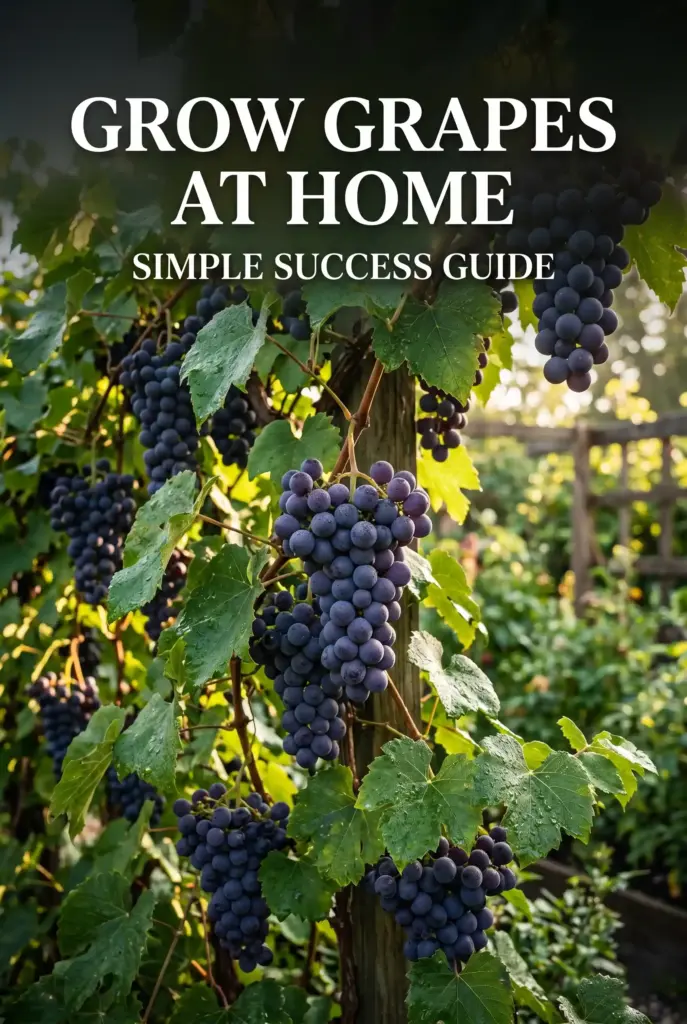
Grapes are a beautiful, productive, and surprisingly easy fruit to grow at home. A single vine can produce pounds of sweet, juicy grapes for fresh eating, jams, juices, or even homemade wine. Whether you have a big backyard or just a sunny balcony with a sturdy trellis, you can grow grapes successfully with the right setup. They look stunning on arbors, fences, and pergolas, adding charm to any garden.
Here is your complete beginner guide to growing grapes at home.
Choose the Right Grape Variety
Grapes come in many types, each suited to different climates and uses:
- Table grapes: Sweet varieties for fresh eating, like Concord or Thompson Seedless.
- Wine grapes: Bold flavors used for wine making.
- Juice grapes: Rich and full bodied, perfect for juicing.
- Seedless varieties: Easier to eat and very popular at home.
Pick a variety that matches your climate. In cold areas, choose hardy varieties like Concord. In warm regions, Muscadine grapes thrive easily.
Pick a Sunny Spot
Grapes love full sun. They need at least 7 to 8 hours of direct sunlight each day to produce sweet, flavorful fruit. Less sun means smaller bunches and weaker plants. Choose the sunniest spot in your yard, ideally with good airflow to prevent disease.
Prepare the Soil
Grapes are not picky, but they grow best in well-drained soil with moderate fertility. Before planting:
- Loosen the soil to a depth of 18 to 24 inches.
- Mix in compost for better structure and drainage.
- Aim for a pH between 5.5 and 7.0.
- Avoid heavy clay or soggy areas, which cause root rot.
Healthy soil supports strong root systems and long-lived vines.
Set Up a Sturdy Trellis
Grapevines need support, since they can grow long and heavy. Set up a strong trellis, fence, or arbor before planting. Common options include:
- Two wire trellis: Simple and great for backyard gardens.
- Pergola: Decorative and provides shade in warm months.
- Fence panels: A practical use for existing fences.
- Arbor: Beautiful for entryways or seating areas.
Make sure the structure is solid. A mature grapevine can be very heavy when loaded with fruit.
How to Plant Grapes
Plant grapes in early spring while they are still dormant. Follow these steps:
- Dig a hole twice as wide and as deep as the root ball.
- Mix some compost with the soil before planting.
- Place the vine and spread the roots out.
- Cover with soil, gently firm, and water deeply.
Space vines 6 to 8 feet apart so each one has room to grow and produce fruit.
Watering Your Grapevines
Young grapevines need consistent watering during their first year while roots establish. After that, grapes are surprisingly drought tolerant. Water deeply once a week during dry spells, especially when fruit is forming. Avoid overhead watering, which encourages mildew.
Feeding Your Vines
Grapes do not need heavy feeding. A light application of compost or balanced fertilizer in early spring is usually enough. Too much nitrogen creates lots of leaves but fewer grapes. Watch your plant and adjust based on its growth.
Pruning Is Essential
Pruning is the single most important skill for grape growers. Without proper pruning, vines grow wild and produce poor fruit. Prune in late winter while the vine is dormant.
- Remove most of the previous year’s growth.
- Keep one or two main canes with strong buds.
- Aim for a balanced shape on the trellis.
- Remove all dead or weak wood.
Heavy pruning may feel scary, but it is what produces healthy, productive vines.
Training Your Vines
As grapevines grow, gently tie them to the trellis. Choose one or two main shoots and remove unwanted side growth. Over the years, your vine will form a strong frame that supports new growth and fruit each season.
Common Grape Problems
- Powdery mildew: Improve airflow and prune for better light.
- Black rot: Remove affected fruit and use fungicide if needed.
- Birds eating grapes: Cover with netting as fruit ripens.
- Japanese beetles: Handpick or use traps.
Thinning the Grapes
If your vine produces too many bunches, the grapes can be small and tasteless. Thin out some bunches in early summer so the remaining ones grow larger and sweeter. This is especially important for young vines that need to focus energy on growth.
Harvesting Your Grapes
Grapes are ready when they are fully colored, sweet, and easily come off the cluster. Taste a few grapes from different parts of the bunch before harvesting. Cut the entire cluster with pruners rather than picking single grapes, which damages the vine.
Storing Fresh Grapes
Fresh grapes keep for up to a week in the refrigerator. Do not wash them until ready to eat, since moisture speeds up spoilage. You can also freeze grapes whole, juice them, or turn them into jam.
Final Thoughts
Growing grapes at home is one of the most rewarding gardening projects you can take on. With the right variety, a sunny location, proper pruning, and a strong trellis, you can enjoy sweet, juicy grapes for many years. Vines are long lived plants that improve with age and care.
Start with one or two vines this season, follow these tips, and watch your home garden transform with the timeless beauty of homegrown grapes.