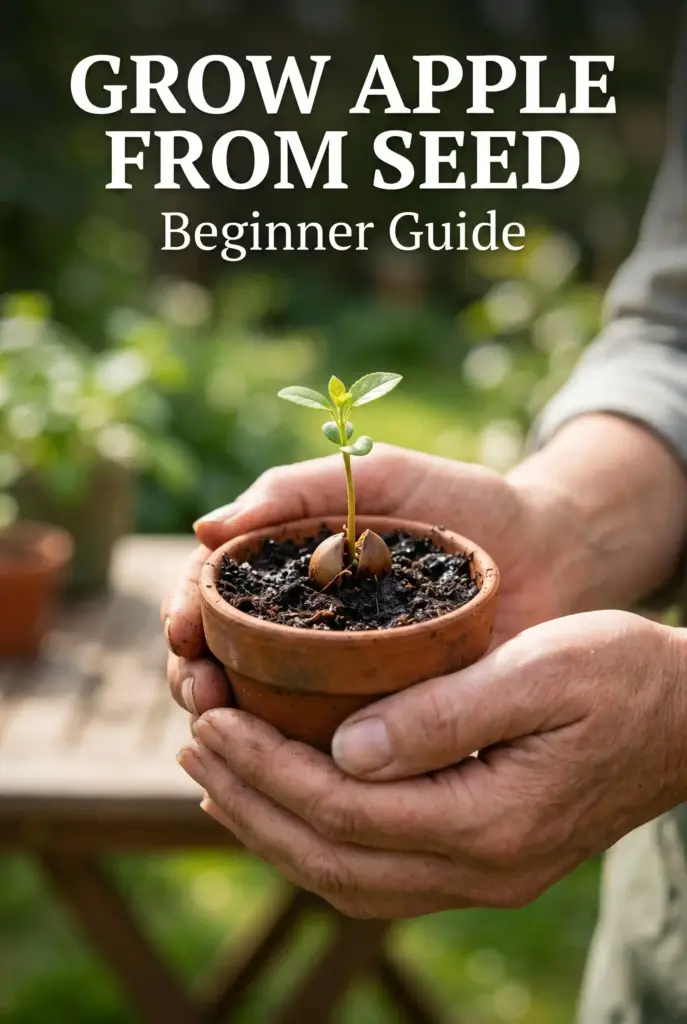
Growing an apple plant from seed is one of the most fun and rewarding gardening projects you can try. It costs almost nothing, uses materials you already have in your kitchen, and gives you a living plant you can watch grow over time. While apple trees grown from seed do not always produce the exact same apple as the fruit they came from, they still grow into beautiful, strong trees and make a wonderful learning experience for any beginner.
This step by step guide shows you how to grow an apple plant from seed, from choosing the right apples to transplanting your young tree into soil.
Choose the Right Apple Seeds
Not every apple seed will sprout. For the best chance of success, choose seeds from fresh, ripe apples. Some varieties germinate more easily than others.
- Honeycrisp, Fuji, and Granny Smith are good choices for beginners.
- Organic apples are best since they are less likely to be treated with sprout inhibitors.
- Avoid seeds from soft, old, or refrigerated apples that may have lost viability.
- Pick at least 10 to 15 seeds, since not all will sprout.
The more seeds you start with, the better your chances of getting healthy seedlings.
Prepare the Seeds for Sprouting
Apple seeds need a cold period to break dormancy, a process called stratification. This mimics winter and tells the seed it is time to grow.
- Rinse the seeds gently to remove any sticky residue.
- Place them on a damp paper towel inside a sealed plastic bag.
- Store the bag in the refrigerator for 6 to 8 weeks.
- Check weekly to make sure the paper towel stays damp.
After a few weeks, you should start seeing tiny white roots emerging from some of the seeds.
Plant the Sprouted Seeds
Once your seeds have sprouted, they are ready for soil. Use a small pot with drainage holes and fill it with a light seed starting mix. Plant each seed about half an inch deep with the root pointing down.
Water gently to settle the soil, then place the pot in a bright, warm location. A sunny windowsill or under a grow light works well. Keep the soil consistently moist but never soggy.
Caring for Young Apple Seedlings
Apple seedlings grow slowly at first, so patience is important.
- Provide at least 6 to 8 hours of bright light daily.
- Keep temperatures between 60 and 75 degrees Fahrenheit.
- Water when the top of the soil feels dry, but do not let the plant wilt.
- Feed with a diluted liquid fertilizer once the plant has a few true leaves.
Rotate the pot every few days so the seedling grows straight instead of leaning toward the light.
Transplanting to a Bigger Pot
When your seedling reaches about 6 inches tall, move it to a larger pot. Choose a pot at least 8 to 10 inches wide with drainage holes. Use a quality potting mix with added compost for nutrients. Handle the roots carefully during transplanting to avoid shock.
Moving Your Apple Tree Outdoors
Once your seedling is strong enough and the weather is warm, you can move it outside. Start with a few hours of shade daily and gradually expose it to more sunlight over 7 to 10 days. This process, called hardening off, helps the plant adjust to outdoor conditions.
If you want to plant it in the ground, choose a sunny location with well-drained, fertile soil. Dig a hole twice as wide as the root ball and plant at the same depth the seedling was in its pot. Water deeply after planting.
Watering and Feeding
Young apple trees need consistent watering, especially during dry spells. Aim for 1 to 2 inches of water per week. Once established, apple trees become more drought tolerant.
Feed your tree in early spring with a balanced fertilizer or compost. Avoid heavy feeding later in the season, which can weaken the plant before winter.
Pruning and Shaping
Pruning helps your tree grow strong and balanced. In late winter, remove any dead or crossing branches. Shape the tree with an open center or central leader to allow good airflow. Young trees benefit from light pruning, while older trees may need more structural work.
Patience Is the Key
Apple trees grown from seed take a long time to bear fruit, usually 7 to 10 years. Some may never produce apples identical to the parent, but they will still grow into beautiful trees. If your goal is fresh fruit quickly, grafting is the traditional method. Growing from seed is about the journey, not the harvest.
Common Problems and Solutions
- Seeds not sprouting: Extend the cold period or try fresh seeds.
- Yellow leaves: Usually from over watering or nutrient shortage.
- Leggy seedlings: Means they need more light.
- Wilting: Check soil moisture and transplant shock.
Final Thoughts
Growing an apple plant from seed is a rewarding project that teaches patience and gives you a deep connection to nature. While you may not get fruit for years, the experience of watching a tiny seed become a full tree is priceless.
Start a few seeds today, follow these steps, and enjoy the joy of growing your own apple tree from scratch.