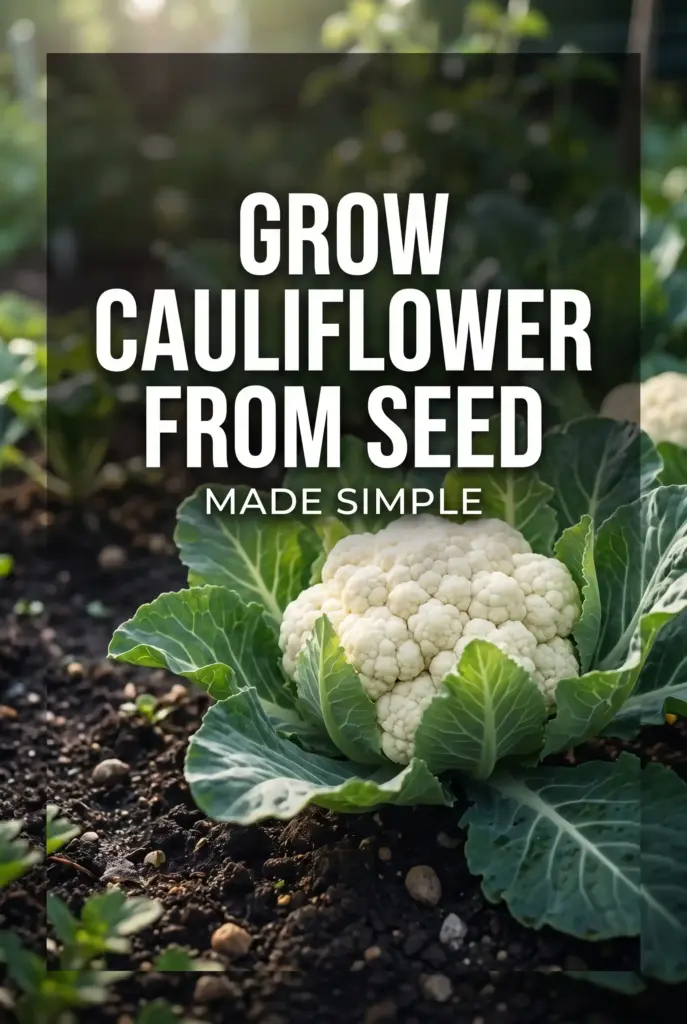
Cauliflower has a reputation for being tricky, but growing it from seed is actually simple once you understand a few key tricks. Homegrown cauliflower is fresher, more flavorful, and far more rewarding than what you find in stores. With the right timing, soil, and care, even a beginner can grow large, beautiful heads in their own garden.
This guide breaks down every step of growing cauliflower from seed in a way that is easy to follow.
Choose the Right Variety
Cauliflower comes in several colors and types. Some are easier than others for beginners.
- Snowball Y Improved: Classic white variety, great for starters.
- Cheddar: Bright orange and rich in nutrients.
- Graffiti: Striking purple heads, fun to grow.
- Romanesco: Beautiful green, spiraled shape with mild flavor.
If this is your first time, Snowball Y Improved is reliable and forgiving.
Timing Is Everything
Cauliflower is a cool season crop. It struggles in heat and bolts quickly when temperatures climb.
- Spring planting: Start seeds indoors 6 to 8 weeks before the last frost.
- Fall planting: Start seeds in mid summer for fall harvests.
- Avoid planting in midsummer heat.
- In mild climates, grow in late fall or winter.
Cauliflower thrives between 60 and 70 degrees Fahrenheit.
Starting Seeds Indoors
Cauliflower seeds are easy to start indoors with simple supplies:
- Use seed trays with drainage holes.
- Fill with a fine seed starting mix.
- Plant seeds about a quarter inch deep.
- Water gently and keep the soil moist.
Seeds usually sprout within 5 to 10 days when kept around 70 degrees Fahrenheit.
Caring for Seedlings
Once seedlings sprout, they need bright light. Place them under a grow light or in a sunny window. Provide at least 14 hours of light per day to prevent leggy growth. Water gently when the top of the soil dries out, and feed with a diluted liquid fertilizer once the seedlings have their first true leaves.
Hardening Off
Before transplanting outdoors, harden off the seedlings over 7 to 10 days. Set them outside for a few hours each day, gradually exposing them to wind and sunshine. This step prevents shock when they move to the garden.
Preparing the Garden Bed
Cauliflower is a heavy feeder and needs rich, fertile soil. Before planting:
- Mix 2 to 3 inches of compost into the top 8 inches of soil.
- Aim for a pH between 6.5 and 7.0.
- Add a balanced fertilizer or aged manure.
- Choose a sunny location with at least 6 hours of direct sun.
Healthy soil leads to large, dense heads.
Transplanting Cauliflower
Move seedlings outside when they are 4 to 6 inches tall and the weather is mild. Space plants 18 to 24 inches apart in rows 24 to 36 inches apart. Plant at the same depth as in their pots and water deeply.
Watering Your Cauliflower
Cauliflower needs consistent moisture to grow firm, tight heads. Aim for about 1 to 1.5 inches of water per week. Uneven watering causes loose heads, bitter flavor, or growth cracks. Mulch heavily to keep the soil cool and moist.
Feeding Your Plants
Cauliflower needs steady feeding to grow strong heads. Apply a balanced fertilizer every 3 to 4 weeks. A nitrogen rich feed in the early stages produces big leaves, while a balanced feed later supports head formation. Compost tea is a great natural option.
Blanching White Cauliflower
White cauliflower needs blanching to keep its color creamy and flavor mild. Once the head reaches about 2 to 3 inches across, gently pull the outer leaves over the head and tie them with twine. This shields the head from sunlight. Colored varieties like Cheddar or Graffiti do not need blanching.
Common Cauliflower Problems
- Loose heads: Caused by warm weather or stress.
- Bolting: Plants flower early in heat. Plant in cool seasons.
- Pests like cabbage worms: Use row covers or hand pick them.
- Yellow leaves: Often a sign of nitrogen shortage.
When to Harvest
Cauliflower is ready when the head is firm, dense, and about 6 to 8 inches across. Cut the head with a sharp knife, leaving a few outer leaves around it for protection. Do not wait too long, since heads can become loose and grainy when overripe.
Storing Fresh Cauliflower
Fresh cauliflower keeps for about a week in the fridge. Wrap loosely in plastic or store in a sealed bag. For longer storage, blanch florets and freeze them for up to a year. Homegrown cauliflower freezes beautifully and tastes great in stir fries, soups, and casseroles.
Final Thoughts
Growing cauliflower from seed may take patience, but it is far simpler than its reputation suggests. With the right timing, rich soil, steady water, and a little protection from heat, you can grow big, beautiful heads in your home garden.
Start your seeds at the right season, follow these steps, and enjoy the satisfaction of harvesting fresh cauliflower straight from your own backyard.