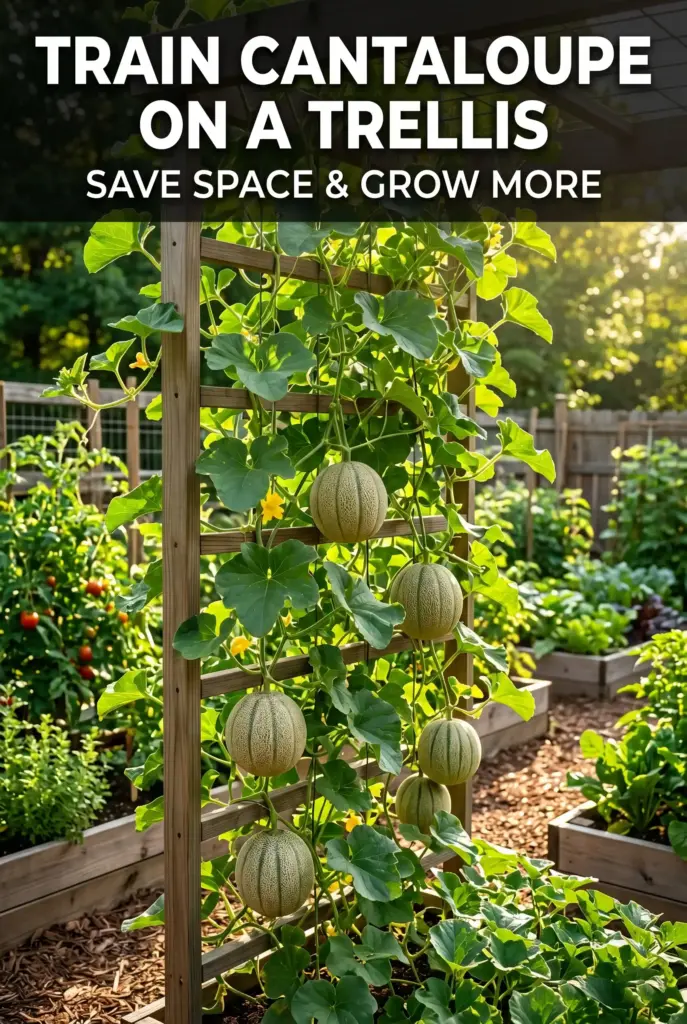
Training cantaloupe on a trellis is one of the smartest ways to grow these juicy summer melons, especially if your garden space is limited. Vertical growing saves room, keeps fruit clean, improves air flow, and even produces sweeter melons by letting more sunlight reach the vines. While cantaloupes have long, sprawling stems, they actually adapt well to vertical growing with a little guidance. Whether you have a small backyard, a raised bed, or just a sunny patio, you can grow cantaloupes on a trellis successfully.
Here is your complete guide to training cantaloupe on a trellis for a healthy, productive harvest.
Why Trellis Cantaloupe
Growing cantaloupes vertically has many advantages over letting them sprawl on the ground:
- Saves valuable garden space.
- Improves air circulation and reduces disease.
- Keeps fruit off the soil, preventing rot.
- Allows more sunlight on leaves and fruit.
- Makes harvesting and pruning much easier.
Once you try vertical cantaloupe growing, you may never go back to sprawling vines.
Choose the Right Variety
Not all cantaloupes work well on a trellis. Look for varieties with smaller fruits and vining habits:
- Minnesota Midget: Compact and easy to train.
- Sugar Cube: Personal sized melons with strong flavor.
- Sugar Baby: Small enough for vertical growing.
- Ambrosia: Sweet and productive on a trellis.
Avoid varieties with very large melons, which can be too heavy for vertical supports.
Picking the Right Trellis
Cantaloupe trellises need to be strong, since the vines and fruit can get heavy:
- Cattle panels: Heavy duty and last for years.
- Wooden A-frame trellis: Easy to build and reliable.
- Metal mesh panels: Strong and rust resistant.
- Heavy duty PVC frames: Lightweight but sturdy enough.
- Arched garden trellises: Beautiful and productive.
Whatever you choose, make sure the trellis stands at least 6 feet tall and is firmly anchored in the ground.
Set Up Before Planting
Install your trellis before placing the cantaloupe plants. Trying to add support after the vines are growing can damage roots and stems. Drive stakes deep into the ground and make sure the trellis can handle wind and fruit weight.
Prepare the Soil
Cantaloupes need rich, well-drained soil:
- Mix in 2 to 3 inches of compost before planting.
- Aim for a pH between 6.0 and 6.8.
- Plant in mounded soil for better drainage.
- Add a slow release fertilizer at planting.
Healthy soil leads to vigorous vines and sweet, productive melons.
Planting Your Cantaloupe
Plant cantaloupe directly at the base of the trellis after soil temperatures reach 70 degrees Fahrenheit:
- Sow seeds 1 inch deep, 2 to 3 per spot.
- Space plants 18 to 24 inches apart along the trellis.
- Thin to the strongest seedling once they sprout.
- Water gently after planting.
Cantaloupe transplants can also be used to give you a faster start.
How to Train the Vines
Cantaloupes do not climb on their own as easily as cucumbers, so a little guidance helps:
- Choose the strongest main vine and tie it gently to the trellis.
- Use soft garden twine or plant clips.
- Wrap new growth around the support as it grows.
- Remove competing side shoots that crowd the main vine.
Within a few weeks, your cantaloupe vines will be climbing happily up the trellis.
Supporting Heavy Fruits
As cantaloupes grow, they can become heavy enough to fall off the vine. Use slings to support each melon:
- Old fabric, mesh bags, or pantyhose work great.
- Tie the sling securely to the trellis above the melon.
- Make sure the sling lifts the fruit gently.
- Check slings weekly as fruits grow.
Without support, ripening fruit may break off too early or damage the vine.
Watering and Sunlight
Cantaloupes need lots of sunshine. Place your trellis in a spot with at least 6 to 8 hours of direct sun per day. Water deeply 1 to 2 inches per week, but reduce watering once fruit begins to ripen for sweeter melons. Mulch around the base to lock in moisture.
Feeding Your Vines
Cantaloupes are heavy feeders. Use a balanced fertilizer every 2 to 3 weeks during the growing season. Switch to a phosphorus and potassium rich blend when flowers form for bigger, sweeter melons.
Pollination Tips
Cantaloupes rely on bees for pollination. Encourage pollinators by planting flowers nearby and avoiding pesticides during bloom time. You can also hand pollinate by transferring pollen between male and female flowers using a small brush.
Pruning for Better Yields
Light pruning helps direct energy to the strongest vines and fruits:
- Remove side shoots that crowd the trellis.
- Pinch off blossoms once a few fruits begin to ripen.
- Remove yellow or damaged leaves.
Pruning improves air flow and keeps the plant focused on producing quality melons.
Common Problems and Solutions
- Powdery mildew: Improve airflow and avoid wet leaves.
- Small fruit: Often from poor pollination or shaded vines.
- Cracked melons: Caused by heavy watering near harvest.
- Pests: Use row covers early in the season.
How to Tell When Melons Are Ripe
Trellis grown cantaloupes ripen the same way as ground grown:
- Skin turns from green to tan or beige.
- The fruit smells sweet and fragrant.
- The stem slips off with a gentle tug.
Picking at the right time gives you the sweetest possible melon.
Final Thoughts
Training cantaloupe on a trellis is one of the smartest ways to grow this beloved summer fruit. With a strong support, good soil, steady watering, and a bit of training, your vines will reward you with sweet, fragrant melons in a fraction of the space. Vertical growing also keeps your garden tidy and productive.
Set up your trellis this season, plant a few cantaloupe vines, and enjoy the joy of growing big, beautiful melons in a small footprint.