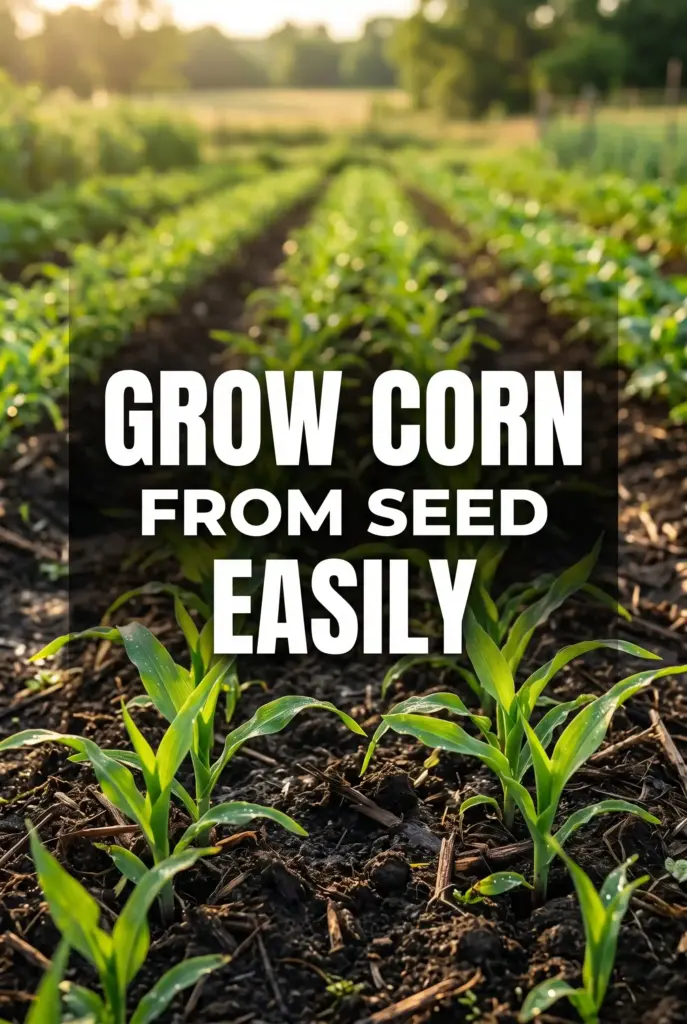
Few things taste better than fresh sweet corn picked straight from the garden. The kernels are tender, sweet, and bursting with flavor that frozen or canned corn just cannot match. Growing corn from seed may sound intimidating, but it is actually one of the easiest crops once you understand a few key tricks. With the right space, sunshine, and care, even a beginner can grow tall, healthy corn plants loaded with delicious ears.
Here is your complete easy guide to growing corn from seed at home.
Choose the Right Corn Variety
Corn comes in several types, each with its own use:
- Sweet corn: The classic eating corn for fresh meals.
- Popcorn: Dries on the cob and pops when heated.
- Flint corn: Used for cornmeal and decoration.
- Dent corn: Mostly grown for animal feed and grain.
For home gardens, sweet corn is the most popular and rewarding. Try varieties like Honey Select, Silver Queen, or Bodacious for great flavor.
When to Plant Corn
Corn loves warm weather and cannot tolerate frost. Plant only after the soil temperature reaches at least 60 degrees Fahrenheit, usually 2 weeks after the last frost. Cold soil causes seeds to rot before sprouting.
Pick the Right Spot
Corn needs a sunny, open area with at least 6 to 8 hours of direct sun each day. Avoid spots near tall trees or buildings that block sunlight. Corn also depends on wind for pollination, so an open space is ideal.
Prepare the Soil
Healthy corn starts with rich, fertile soil. Before planting:
- Work compost into the top 8 inches of soil.
- Aim for a pH between 6.0 and 6.8.
- Loosen any compacted areas to help roots spread.
- Add a balanced fertilizer to give plants a strong start.
Good soil makes a huge difference, since corn is a heavy feeder.
How to Plant Corn Seeds
Corn is best planted directly in the garden. Follow these steps for the best results:
- Plant seeds 1 to 2 inches deep.
- Space seeds 8 to 12 inches apart in rows.
- Plant in blocks of at least 4 rows side by side, not single long rows.
- Water gently to settle the soil.
Block planting is essential because corn pollinates by wind. Single rows often produce poorly filled ears.
Watering Corn
Corn needs steady moisture, especially when ears are forming. Aim for about 1 to 2 inches of water per week. Water deeply rather than lightly, and use mulch around the base to keep the soil cool and damp. Drought stress during pollination leads to small or missing kernels.
Feeding Your Plants
Corn is a hungry crop. Feed it twice during the growing season:
- First feeding: When plants are 12 inches tall.
- Second feeding: When tassels begin to form at the top.
Use a nitrogen rich fertilizer for strong leaves, then switch to a balanced blend for ear development.
Thinning and Spacing
Once seedlings are about 4 inches tall, thin them so the strongest plant in each spot has full space to grow. Crowded corn produces smaller ears and weaker stalks.
Pollination Tips
Corn relies on wind to move pollen from the tassels at the top of the plant down to the silks on each ear. To improve pollination:
- Plant in blocks rather than single rows.
- Avoid mixing different corn types that can cross pollinate.
- If wind is weak, gently shake the plants to spread pollen.
Each silk connects to one kernel. Good pollination means full, plump ears.
Common Corn Problems
- Earworms: Caterpillars that feed inside the husk. Use natural sprays or accept some loss.
- Birds eating seeds: Cover newly planted seeds with mesh.
- Missing kernels: Caused by poor pollination or stress.
- Yellow leaves: Often nitrogen shortage. Side dress with compost.
How to Tell When Corn Is Ready
Corn is ready about 60 to 100 days after planting, depending on the variety. Look for these signs:
- Silks turn brown and dry.
- Ears feel firm and full to the touch.
- A kernel pricked with a fingernail releases milky white liquid.
Picking too early gives watery kernels, and picking too late gives starchy ones.
Harvesting Sweet Corn
Pick ears in the morning when sugars are at their highest. Pull the ear down and twist it firmly to break it from the stalk. Cook or refrigerate corn quickly, since the sugars convert to starch within hours. The faster you eat it, the sweeter it tastes.
Storing and Preserving
Fresh corn keeps for a few days in the fridge in its husk. To preserve it longer, blanch and freeze the kernels or freeze whole ears. Homegrown corn keeps its sweet flavor much better when stored quickly after picking.
Final Thoughts
Growing corn from seed is easier than most beginners expect, and the reward is unmatched. With sunlight, rich soil, steady water, and good spacing, your plants will reward you with tall stalks and big, tender ears of sweet corn.
Plant a small patch this season, follow these tips, and enjoy one of the most delicious crops you can grow at home.