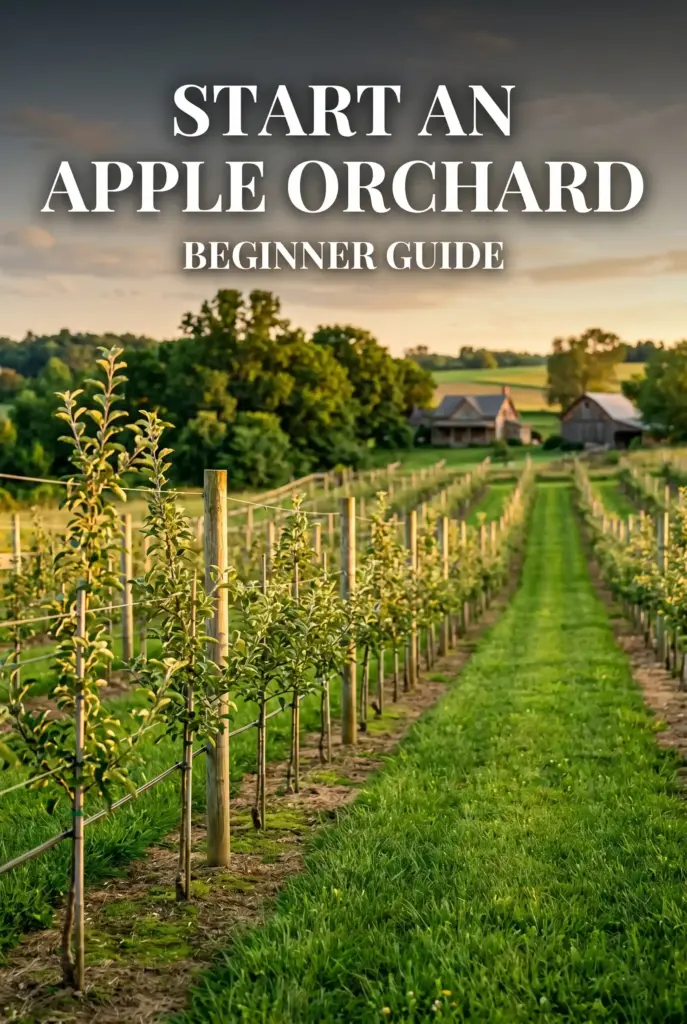
Planting your own apple orchard is one of the most rewarding long term gardening projects you can take on. Few things compare to walking through rows of your own apple trees in spring when they bloom, or in fall when they are heavy with fruit. While orchards used to be reserved for big farms, today even a small backyard can hold a productive mini orchard with just a handful of trees.
This beginner friendly guide covers everything you need to know to plan, plant, and care for your first apple orchard, even if you have never grown a fruit tree before.
Plan Your Orchard Layout
Before you buy a single tree, take time to plan your orchard layout. Good planning saves you years of trouble and gives your trees the best chance to thrive.
- Choose a flat or gently sloped area with full sun, at least 6 to 8 hours per day.
- Avoid low spots where cold air settles and frost lingers.
- Plan rows running north to south for even sunlight.
- Leave enough room between trees and rows for easy walking and equipment.
Even a small orchard of 4 to 6 trees can produce hundreds of pounds of apples each year, so do not feel pressured to plant a huge area.
Choose the Right Apple Varieties
Most apple trees need a different variety nearby to cross pollinate. Choose at least two compatible varieties that bloom at the same time. A few popular and reliable choices for home orchards include:
- Honeycrisp: Sweet, crunchy, and very popular with eaters.
- Gala: Mild, sweet, and excellent for fresh eating.
- Granny Smith: Tart and crisp, perfect for baking and pies.
- Fuji: Sweet, dense, and stores beautifully through winter.
- Liberty: Disease resistant and great for organic growing.
Mixing several varieties also gives you a longer harvest window, since each one ripens at slightly different times.
Pick the Right Rootstock
Apple trees come in different sizes depending on the rootstock used. The rootstock determines the final tree height, fruiting age, and how much space it needs.
- Standard: Grows up to 30 feet, takes longer to fruit.
- Semi dwarf: Reaches 12 to 18 feet, a good middle ground.
- Dwarf: Stays around 6 to 10 feet, perfect for small backyards.
For most beginners, dwarf or semi dwarf trees are the easiest to manage. They start producing fruit in about 2 to 4 years and are easier to prune and harvest.
Prepare the Soil
Apple trees grow best in deep, well-drained, fertile soil with a pH between 6.0 and 7.0. Before planting:
- Test your soil to know what nutrients it needs.
- Loosen the soil deeply so roots can spread easily.
- Mix in plenty of compost to improve texture and fertility.
- Avoid wet, soggy spots that lead to root rot.
Take time to fix soil problems before planting, since trees will live in that spot for decades.
Spacing Your Trees
Proper spacing is one of the biggest factors in orchard success. Trees need room for sunlight, air flow, and root growth.
- Dwarf trees: 8 to 10 feet apart.
- Semi dwarf trees: 12 to 15 feet apart.
- Standard trees: 18 to 25 feet apart.
Leave at least 12 to 20 feet between rows so you have plenty of space to walk, mow, and work around the trees.
How to Plant Apple Trees
The best time to plant apple trees is in early spring or late fall while they are dormant. Follow these simple steps:
- Dig a hole twice as wide and just as deep as the root ball.
- Loosen the soil at the bottom and sides.
- Place the tree so the graft union sits about 2 inches above ground.
- Spread roots out gently and fill the hole with soil.
- Water deeply and add a thick layer of mulch around the base.
Stake young trees if your area is windy. This protects the trunk while roots establish.
Watering Young Trees
Newly planted trees need consistent watering during their first 2 years. Aim for 1 to 2 inches of water per week, more during dry summers. Once the trees are established, they become more drought tolerant but still benefit from deep watering during fruit development.
Mulch around the base of each tree with wood chips or straw. This keeps moisture in, blocks weeds, and protects the roots.
Feeding the Orchard
Apple trees do not need heavy feeding, but a balanced fertilizer in early spring helps support healthy growth. Avoid high nitrogen fertilizers, which encourage soft leafy growth that pests love. Compost added each year is a gentle and reliable way to feed your trees.
Pruning for Strong Trees
Pruning shapes your trees, encourages fruit production, and keeps them healthy. Prune apple trees in late winter while they are still dormant.
- Remove dead, damaged, or crossing branches.
- Open the center to let in light and air.
- Shorten long shoots to encourage side branches.
- Always cut just above an outward facing bud.
Light annual pruning is much better than waiting for an overgrown tree.
Protecting Against Pests and Disease
Apple trees can face several common pests and diseases. Stay ahead of problems with simple checks:
- Aphids: Spray with soapy water or attract ladybugs.
- Apple scab: Choose resistant varieties and rake fallen leaves.
- Codling moth: Use traps or natural sprays.
- Deer and rabbits: Use tree guards around trunks.
Pollination Tips
Bees do most of the pollinating in apple orchards. Plant flowers nearby to attract pollinators, and avoid spraying chemicals during bloom time. The more bees you have, the bigger your harvest.
When to Harvest
Most apple varieties ripen between late summer and mid fall, depending on the type. Apples are ready when they twist easily off the branch and the seeds inside are dark brown. Taste a few before harvesting the rest, since true ripeness depends on flavor.
Storing Your Apples
Different apples store for different lengths of time. Some, like Gala, last only a few weeks, while Fuji and Granny Smith can keep for several months in cool storage. Keep apples in a cool, dark place around 32 to 40 degrees Fahrenheit for the longest shelf life.
Final Thoughts
Planting an apple orchard is a long term investment that pays off year after year. With good planning, the right varieties, healthy soil, and steady care, your trees will reward you with beautiful blossoms in spring and abundant fruit in fall.
Start small with just a few trees, follow these steps, and watch your home orchard grow into a thriving source of fresh, homegrown apples for many years to come.