Few vegetables are as satisfying as a cucumber you pulled from your own garden. Crisp, juicy, and mild, homegrown cucumbers make salads taste better and summer meals feel fresher. The best part is that they are genuinely easy to grow, even if you have never planted anything before.
This beginner guide walks you through every step, from choosing the right type to harvesting your first crunchy cucumber.
Choose the Right Cucumber Type
Cucumbers come in two main groups: vining and bush. Vining types grow long and need a trellis, while bush types stay compact and work well in containers.
- Slicing cucumbers: Long and smooth, perfect for fresh eating.
- Pickling cucumbers: Shorter and bumpier, ideal for canning.
- Bush cucumbers: Compact plants that fit in pots or small spaces.
- English cucumbers: Thin-skinned and nearly seedless, great for salads.
Beginners often do best with a bush variety like Spacemaster or a reliable vining one like Marketmore 76.
Pick the Right Spot
Cucumbers love sunshine and warmth. They need at least 6 to 8 hours of direct sun each day. Choose a spot with well-drained soil that has not grown cucumbers, melons, or squash recently, since these share pests and diseases.
If you are growing in containers, pick a pot at least 12 inches deep and wide, and place it in your sunniest corner of the balcony or patio.
Prepare Rich, Loose Soil
Cucumbers are hungry plants. They grow best in soil that is rich in organic matter and drains well. Before planting, work a generous layer of compost into the top 8 inches of soil. Aim for a pH between 6.0 and 7.0.
If your soil is heavy clay, mix in compost and a bit of coarse sand. If you are using a pot, choose a quality potting mix and add slow release fertilizer for a steady supply of nutrients.
When to Plant Cucumbers
Cucumbers hate cold. Do not rush to plant them. Wait until all danger of frost has passed and the soil is at least 65 to 70 degrees Fahrenheit. Planting too early slows growth and invites disease.
You can start seeds indoors two to three weeks before your last frost, or sow them directly once the weather is warm and settled.
How to Plant the Seeds
Cucumbers prefer to be direct sown, but transplants work too. Here is how to do it right:
- Plant seeds one inch deep, two to three seeds per spot.
- Space plants 12 inches apart if trellising, or 24 inches if letting them sprawl.
- Water gently to settle the soil around the seeds.
- Thin to one strong seedling per spot once they have true leaves.
If you are transplanting, be gentle. Cucumber roots are delicate and do not like to be disturbed.
Use a Trellis for Healthier Plants
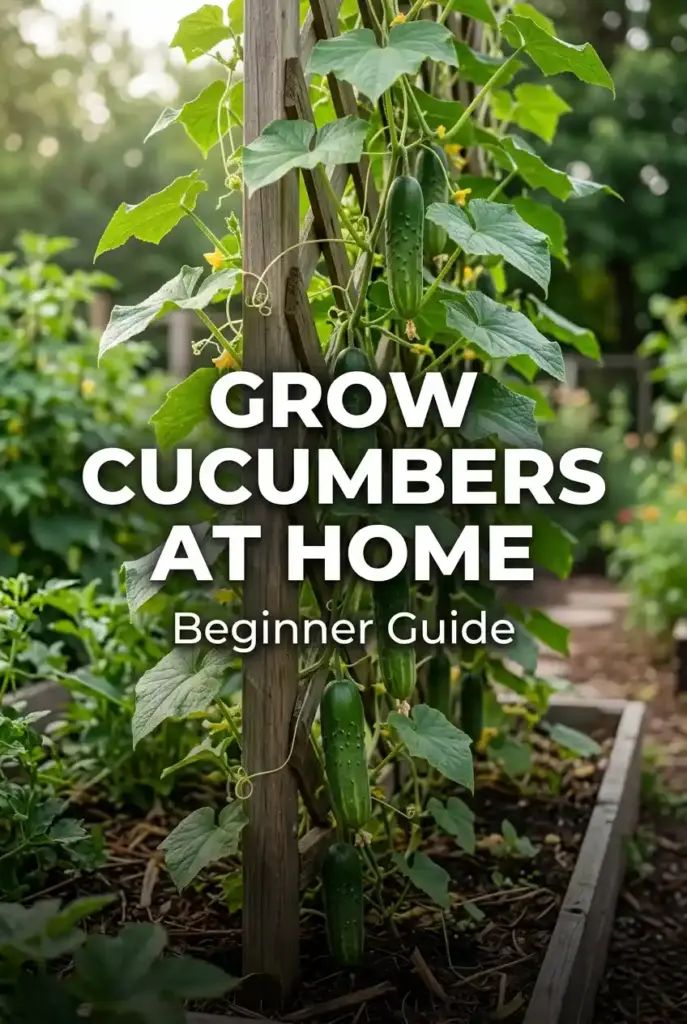
Trellising is one of the best tricks for growing cucumbers. It saves space, keeps fruits off the ground, and reduces diseases. A simple wooden frame, metal cage, or nylon netting works well. As vines climb, gently guide them onto the support. They will cling with their tendrils on their own.
Trellised cucumbers grow straighter, cleaner, and are easier to spot at harvest time.
Watering the Right Way
Cucumbers are 95 percent water, so they drink a lot. Give them about one to two inches of water per week, more during heat waves. Always water at the base, not on the leaves, to prevent powdery mildew. Inconsistent watering makes cucumbers bitter and misshapen, so aim for slow, deep, steady soaks.
Feeding Your Cucumbers
Once plants start flowering, feed them every two weeks with a balanced fertilizer or compost tea. Avoid too much nitrogen, which creates lots of leaves and fewer fruits. A formula with more phosphorus and potassium encourages flowers and strong cucumbers.
Common Pests and Problems
A few issues pop up often, but they are all manageable.
- Cucumber beetles: Small yellow and black beetles that damage leaves. Use row covers until flowering.
- Powdery mildew: White powder on leaves. Water at the base and space plants well for airflow.
- Bitter fruit: Usually from heat stress or dry soil. Mulch and water evenly.
- No fruit forming: Often from poor pollination. Let bees in or hand pollinate with a brush.
Harvest Often
Cucumbers grow fast. Once they start producing, check your plants every day or two. Pick them when they are firm, bright green, and the size listed on your seed packet. Slicing types are best at 6 to 8 inches, while pickling types are best at 3 to 5 inches.
Harvesting often actually tells the plant to keep producing. If you leave fruits on the vine too long, they turn yellow and signal the plant to stop making more.
Final Thoughts
Growing cucumbers at home is simple, satisfying, and productive. With warmth, sunshine, steady water, and a simple trellis, even a small garden can produce enough cucumbers to keep you eating fresh all summer.
Once you taste a cucumber straight off the vine, you will not want to buy one at the store again. Start with one or two plants this season, and by the end of summer, you will be giving cucumbers to all your neighbors.